Is Your Rising Kindergartner Ready for Math? A Gentle Readiness Check
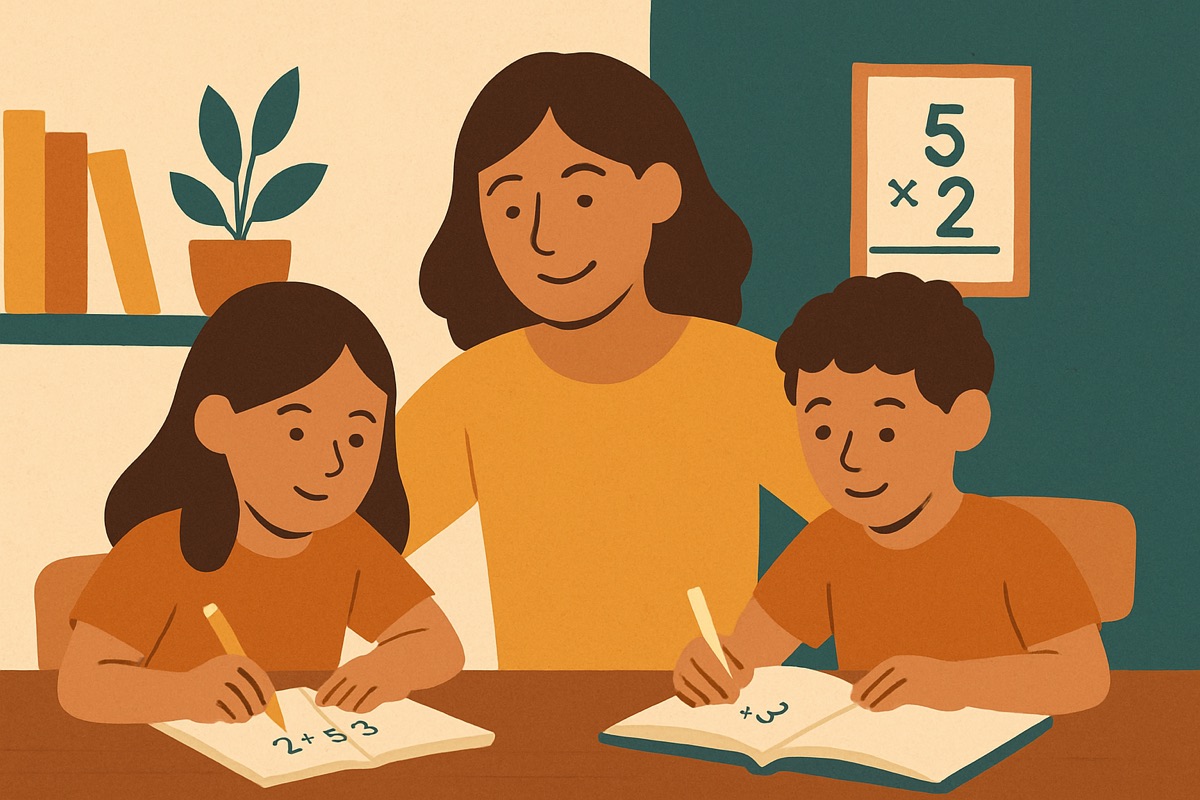
A dad stopped me at back-to-school night, worried. His five-year-old couldn't write her numbers past ten and definitely couldn't add, and the neighbor's kid supposedly could. Was she behind? I asked him one thing: when you set the table, can she count out four forks for four people and stop at four? She could. I told him she was fine. Kindergarten math readiness isn't about writing digits or doing sums. It's about a handful of quiet, everyday skills that most kids build without a single worksheet, and I'd rather you know what they actually are than lose sleep over the neighbor's kid.
Counting is more than reciting numbers
Plenty of four- and five-year-olds can rattle off "one two three four five six seven eight nine ten" like a song. That's a great start, but it's memorization, not counting yet. Real counting shows up when the numbers attach to actual stuff.
Watch for this. Hand your child a small pile of buttons, maybe seven of them, and ask how many there are. A kid who's ready will touch each button once as she says one number, then land on "seven" and know that seven is the answer, not just the last word she happened to say. Teachers call that last part cardinality, the idea that the final number tells you the total. If she counts the same button twice, or says the numbers faster than she points, that's completely normal for the age. It just means the skill is still cooking.
You don't drill this. You count things all day. Stairs on the way up. Grapes on the plate. Cars that go by while you wait. The math skills before kindergarten that matter most are the ones you can build while doing something else entirely.
Comparing and sorting come before adding
Long before a kid adds, she needs to feel that some amounts are bigger than others and that things can be grouped by how they're alike. This is the foundation adding sits on top of, and it's easy to spot.
- More and less. Put three crackers on one napkin and six on another. Ask which has more. A ready kindergartner can usually tell without counting, just by looking, and then confirm by counting if you nudge her.
- Sorting by a rule. Dump out a bin of toys and ask her to put all the animals here and all the cars there. Then ask her to sort them a different way, maybe by color. Being able to switch the rule is a real sign of flexible thinking.
- Matching one to one. Can she give one cracker to each stuffed animal at the pretend tea party, no animal skipped, none double-served? That one-to-one match is the exact same brain move counting needs.
None of this looks like math class, and that's the point. If your child sorts her Halloween candy into piles or argues that her brother got more fries, she's practicing the very things her teacher will build on in September.
Shapes, patterns, and the words in between
Math in kindergarten is also spatial and verbal, and this part gets overlooked because it doesn't involve numbers.
Shapes first. Can she name a circle, a square, a triangle? Bonus if she notices a shape out in the world, the round clock, the rectangular door. She doesn't need to know a hexagon. Circle, square, triangle, and a general sense of round versus pointy is plenty.
Patterns next. Lay out red, blue, red, blue with blocks and ask what comes next. A child who can extend a simple pattern, or make her own, is doing early algebra without anyone calling it that. Patterns are how brains learn to predict, and prediction is a huge chunk of later math.
Then the little words. Under, over, behind, next to, first, last, before, after. These position and sequence words show up constantly in kindergarten math instructions, and a kid who understands "put the block behind the cup" has an easier first month. You build these just by talking. "Your shoes are under the bench." "You go first, then your sister."
What you can safely ignore for now
Here's the part that lets parents breathe. A lot of the things people panic about don't matter yet.
She does not need to write numbers neatly, or at all. Fine motor control comes on its own timeline and has nothing to do with whether she understands quantity. She does not need to add or subtract. That's what kindergarten is for. She does not need to count to a hundred. Counting confidently to somewhere around ten or twenty, with the numbers attached to real objects, is more valuable than mumbling to a hundred with no meaning underneath.
And she absolutely does not need an expensive program the summer before. If anything, the pressure backfires. The single best thing you can do is keep math feeling friendly, because a kid who thinks numbers are fun walks in willing, and a willing kid learns fast.
A five-minute readiness check you can do tonight
If you want a quick, low-stress read on where your rising kindergartner stands, try these while you're already hanging out. No quiz energy. Just play.
- Count a small handful of objects together and see if she lands on the total and owns it.
- Show two uneven piles and ask which has more.
- Sort a bin of toys one way, then ask her to sort it another way.
- Start a simple color pattern and ask what comes next.
- Ask her to put a toy under the table, then on the chair, then behind you.
If she can do most of these, even a little wobbly, she's ready. If a couple are still shaky, that's not a red flag, it's just your to-do list for the next few months, and every item on it is something you can build during dinner, in the car, or on a walk. Kindergarten math readiness isn't a finish line she crosses before day one. It's a soft on-ramp, and you've probably been building it all along without noticing.