From Second to Third Grade: Getting Ready for Multiplication and Fractions
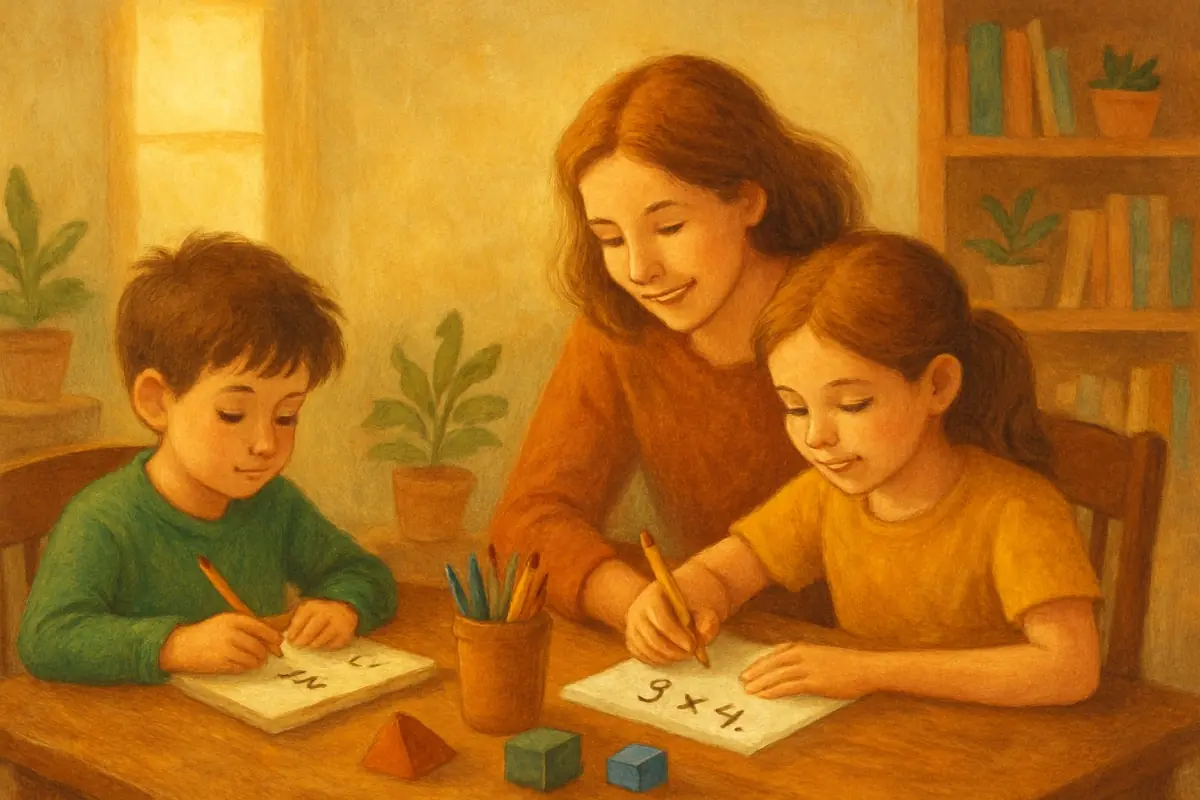
What changes in third grade
Second grade math is mostly about counting well. Add, subtract, count coins, tell time, get comfortable with numbers up to a thousand. Third grade takes a sharp turn. Suddenly there's multiplication, division, and fractions, and all three want the ground underneath them to be steady. A kid who's still counting on fingers for eight plus five is going to struggle when the class moves on to six times seven, because the new work assumes the old work is automatic.
That's the real story of 2nd to 3rd grade math readiness. It isn't about pushing ahead into next year's material over the summer. It's about making sure a handful of second grade skills are genuinely solid, not just barely there. The kids who walk into third grade ready are rarely the ones who were drilled on multiplication early. They're the ones whose foundation didn't wobble.
Fluency with addition and subtraction comes first
Multiplication is repeated addition. That's not a slogan, it's the actual mechanism. Four times three is three plus three plus three plus three. If a child can't add quickly and confidently, every multiplication problem turns into a slow, error-prone counting exercise, and the whole thing feels miserable.
So before you think about times tables at all, check the addition and subtraction facts within twenty. Not "can she get there eventually" but "does she know it without visibly counting." There's a difference between a kid who knows nine plus six is fifteen and a kid who counts up from nine on her fingers to arrive at fifteen. The second kid isn't ready yet, and no amount of multiplication practice will fix a shaky addition base.
You can check this in five minutes at the dinner table. Fire off a dozen facts, mix in some subtraction, and watch the hands. Fingers moving means it's not automatic yet, and that's where the summer time is best spent.
Skip-counting is the on-ramp to multiplication
Before a single times table, teach skip-counting. Count by twos, fives, and tens until it's a chant. Then add threes and fours. This is the bridge between the addition your child already trusts and the multiplication that's coming, and it makes the leap feel small instead of scary.
Here's why it works. When a kid can rattle off "3, 6, 9, 12, 15," they've basically already learned the three times table. They just don't know it yet. When multiplication shows up in the fall and the teacher asks for three times four, that child counts "3, 6, 9, 12" under their breath and lands on the answer. They're not memorizing a mysterious fact. They're using a pattern they already own.
A few ways to make skip-counting stick without it feeling like drills:
- Count steps out loud by twos on the way up the stairs.
- Count fingers and toes by fives, then socks and shoes by twos.
- Set the table and count forks by the number of place settings.
- Count nickels in a jar by fives, then dimes by tens.
None of this looks like homework. All of it builds the exact pattern recognition that makes getting ready for multiplication feel natural instead of forced.
Fractions start with fair sharing, not notation
The fraction symbol scares kids because it looks like nothing else they've seen. Two numbers stacked with a line between them. But the idea underneath it is one your child has understood since they were three years old and demanding an equal share of the cookie.
Start there. A fraction is a fair share of a whole. Cut a sandwich into two equal pieces and you've made halves. Cut a pizza into eight and each slice is one-eighth. The word "equal" is the part that matters most, because kids will happily call two wildly different pieces "halves" until you make them check. Fold a piece of paper in half, then in half again, and let them see the four equal parts appear. That physical folding does more than any diagram in a workbook.
The mistake to avoid is rushing to the written notation. A child who deeply understands that four quarters make a whole, because they've cut and counted the pieces, will pick up the symbol easily. A child who memorized the symbol first, with no picture behind it, tends to think three-fourths is smaller than one-half because three is smaller than four. That confusion is entirely avoidable, and it comes from teaching the notation before the meaning.
A light summer plan that actually helps
You don't need a curriculum. You need ten minutes most days and a little consistency. Spend the first couple of weeks confirming addition and subtraction facts are automatic. Then bring in skip-counting, a few numbers at a time, until twos, fives, tens, threes, and fours are easy. Fold in some fraction talk whenever food gets cut, which in most houses is daily.
Keep it short and keep it real. A kid who does ten focused minutes and walks away feeling capable will come back tomorrow. A kid who gets a forty-minute summer workbook marathon learns that math is punishment for the crime of it being June.
The goal was never to teach third grade math early. It's to make sure that when third grade arrives, the new stuff has something solid to stand on. Get the facts automatic, make skip-counting a habit, and let fractions grow out of the cookie fights you're already having. That's a kid who walks in ready.