Is My Child Behind in Math? How a Teacher Actually Decides
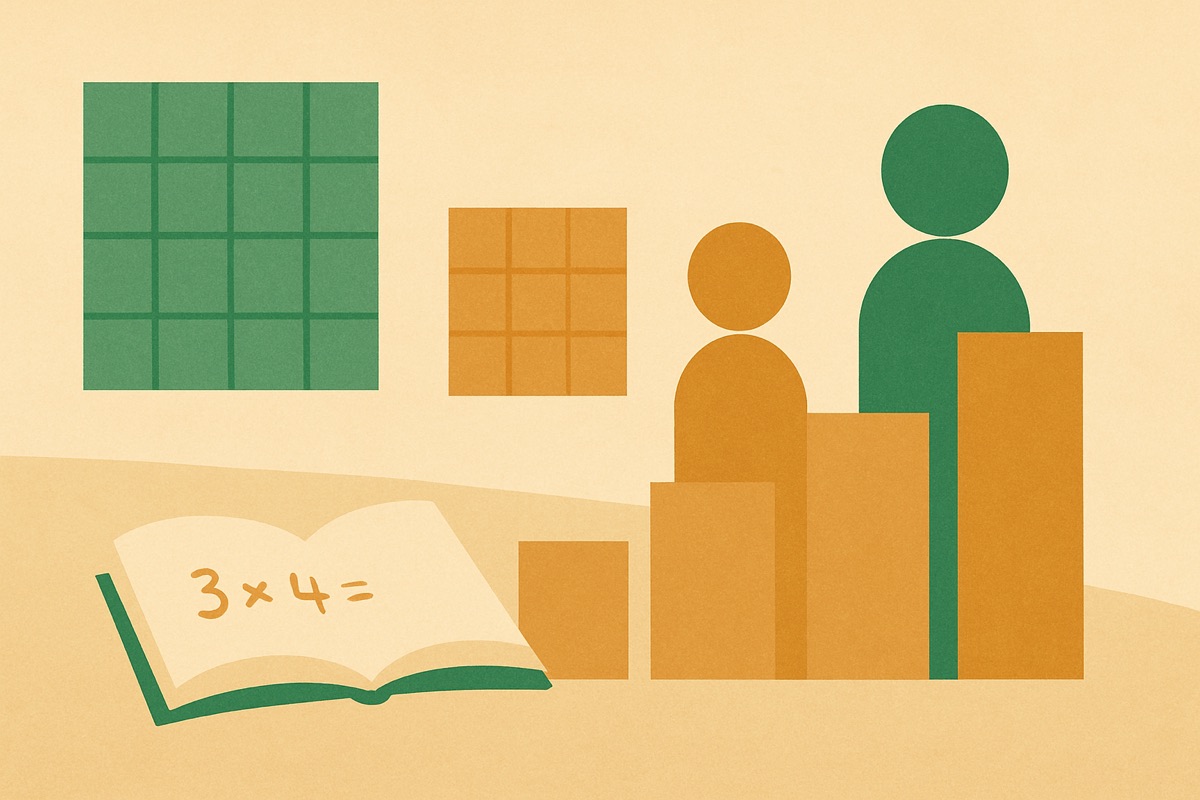
At every conference in October, at least one parent slides a report card across the table and asks some version of the same question. Is my child behind in math? Usually they've done some googling, found a chart of what a fourth grader should know, matched it against their kid, and scared themselves. I get it. But those charts are averages, and no real child is an average. Being behind is a real thing, but it's not what most parents think it is.
So here's how I actually decide, sitting across from a kid five days a week, whether they're behind in math or just having a normal hard stretch. It's less about grade-level checklists than you'd expect.
"Behind" compared to what, exactly
The first thing I do is throw out the idea of a single national standard in my head. Kids develop math skills on wildly different timelines and still end up fine. One of the best math students I ever taught didn't have his multiplication facts solid until the middle of fourth grade, a year "behind" the chart. He wasn't behind in any way that mattered. His number sense was excellent. The facts just took a while to stick.
What I compare a kid to is not a chart. It's three things:
- Where they were a few months ago. Are they moving forward at all?
- The specific building blocks the next thing depends on. Do they have those?
- Whether the gaps are getting bigger or smaller over time.
A kid who's a little below the average but climbing steadily is not who I worry about. A kid who's stalled, or whose gaps are widening while the class moves on, is. The direction matters more than the position.
The building blocks are what actually matter
Math is stacked. You can't do long division without solid multiplication. You can't do fractions without understanding division. When a kid struggles with this year's work, nine times out of ten the real problem is a hole in last year's work that never got patched.
So instead of asking "is she at grade level," I ask "does she have the pieces this year's math is built on." A fifth grader drowning in fraction operations often has a shaky grasp of what a fraction even is. Fix that foundation and the grade-level stuff starts working. Drill the grade-level stuff without fixing the foundation and you just get a frustrated kid doing the same wrong thing faster.
This is why I'm skeptical of pushing a struggling kid forward to keep pace. If the base isn't there, forward is the wrong direction. You go back, find the missing block, set it in place, and then the tower stops wobbling. It feels slower. It's actually the fast way.
Signs that mean pay attention
A single bad grade is almost never a real signal. Kids have off days, off units, off weeks. What I watch for is patterns that hold over time.
Real warning signs look like this. The struggle is spread across most of math, not just one topic. It's getting worse month over month instead of better. Your kid has started saying "I'm just bad at math," which is a belief that becomes a self-fulfilling thing fast. Homework that should take twenty minutes takes an hour of tears. Or the basics, the stuff from a year or two ago, are still not automatic. When 6 plus 7 still needs finger counting in fourth grade, everything built on top runs slow.
Any one of those on its own might be nothing. Three of them together, holding steady for a couple of months, is when I'd say yes, this kid is behind in a way worth acting on.
Signs it's probably fine
On the other side, plenty of things that terrify parents don't worry me at all. A kid who bombed one test but understands the material when you talk it through is fine. A kid who's slow but accurate and clearly gets it is fine. A kid who struggled with one specific unit, say measurement or telling time, and is solid on everything else is fine. Those are potholes, not a cliff.
I also don't worry much about a kid who's a few months behind a chart but genuinely enjoys thinking about numbers and doesn't believe they're bad at it. Attitude is a real asset. A curious kid who's slightly behind will usually catch up. A defeated kid who's exactly on grade level can quietly slide. The story a kid tells themselves about math matters more than most parents realize.
What to do if you think it's real
If the pattern is there and it's holding, don't panic and don't wait. Start with the classroom teacher. Ask a specific question: where exactly are the gaps, and what's the one foundational skill you'd shore up first? Teachers can usually name it in a sentence. Then work that specific thing, a little bit, most days. Short and focused beats long and scattered.
Keep the practice tied to real understanding, not just repetition. A kid who's behind does not need forty problems a night of the thing they can't do. That builds dread. They need the missing block taught clearly, then practiced in small honest doses, with the difficulty nudged up only as it clicks. Whatever you use to work on it, from flashcards at the table to an app like Math Prizes, the test is the same one from the classroom. Is a specific hard thing getting easier? If yes, keep going. If not, change the approach.
And give it time. A gap that took a year to open rarely closes in a week. The kid I mentioned, the one who was "behind" on multiplication, closed the whole thing in about two months once we found the actual hole and stopped drilling the wrong layer. He went on to love math. Behind is a snapshot. It's not a prediction. What you do next matters far more than where the snapshot landed.