Fifth Grade Math: The Last Stop Before Middle School Math
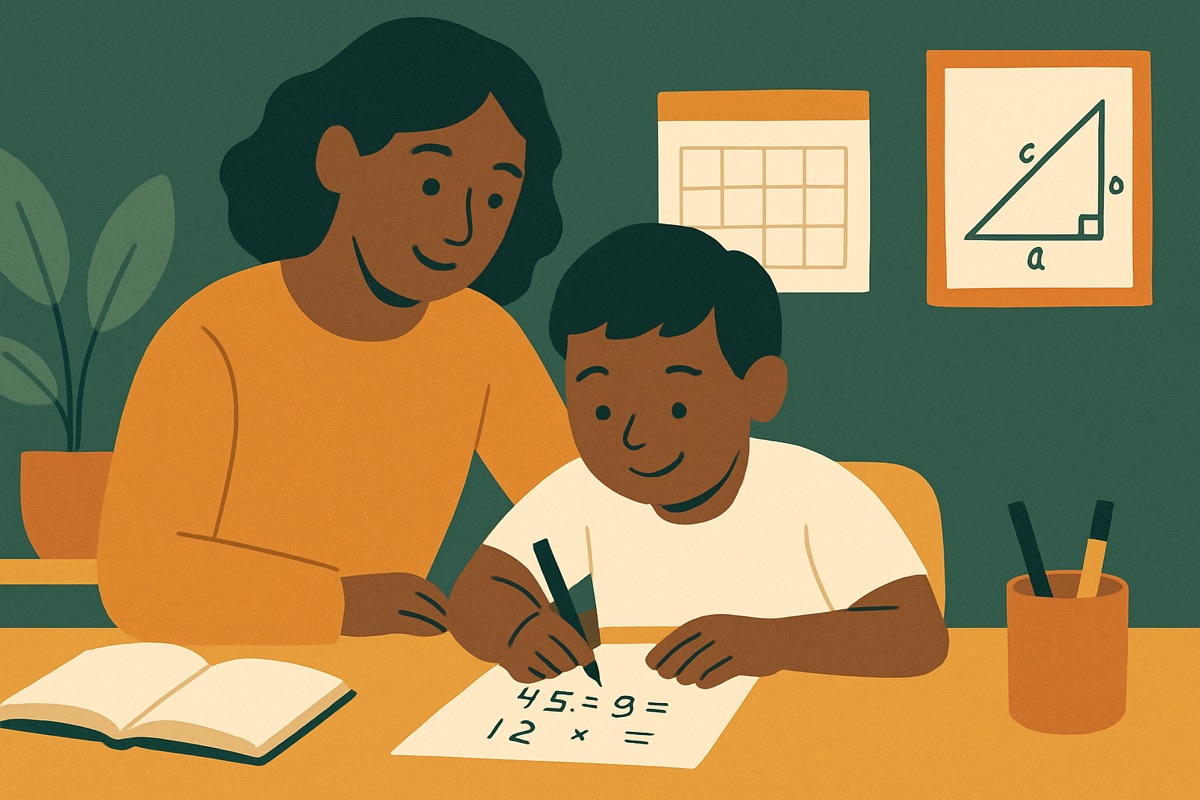
By the time a kid reaches sixth grade, the classroom stops slowing down for gaps. That's the thing I wish more parents knew about fifth grade. It's the last year where the pace still leaves room to patch a wobbly skill before it becomes a real problem. In middle school the math moves faster, the teachers change every period, and nobody's watching one kid closely enough to notice that his fractions never quite made sense. So the 5th grade math skills a child leaves with aren't just this year's grade. They're the foundation the next three years get built on.
I've taught both fifth and sixth, and the gap between them surprises people. A kid can coast through fifth on effort and still hit a wall in sixth if the underlying pieces are hollow. Here's what actually needs to be solid.
Fractions have to make real sense
If I could only fix one thing before a kid left fifth grade, it would be fractions. Not because they're the hardest topic, but because everything in middle school leans on them. Ratios, proportions, algebra, all of it assumes fractions are comfortable.
By the end of fifth, a child should be able to add and subtract fractions with unlike denominators, multiply fractions, and start dividing them, and actually understand what those operations mean. That last part is where kids get lost. A student can follow the steps to multiply 2/3 by 3/4 and have no idea that they just found "two-thirds of three-quarters." When the meaning is missing, sixth grade ratios feel like a foreign language.
Here's a quick home test. Ask your fifth grader which is bigger, 2/3 or 3/4, and ask her to explain why. If she can reason it out (thirds are bigger pieces but you have fewer of them, so let's think it through) she understands fractions. If she just cross-multiplies from memory with no picture in her head, there's a gap worth closing this year.
Decimals and the place-value logic behind them
Fifth grade is where decimals get serious. Kids need to add, subtract, multiply, and divide them, and connect them to fractions (0.25 and 1/4 are the same amount wearing different clothes).
The place where kids stumble isn't the arithmetic. It's the meaning of the digits. A student who thinks 0.7 is smaller than 0.65 because "65 is bigger than 7" has a place-value hole, and that hole shows up again with percentages and scientific notation later. Money is the easiest fix I know. Ask what's more, seventy cents or sixty-five cents, and a kid who was confused on paper suddenly gets it. Then walk it back to the decimals.
Operations with bigger numbers, done confidently
Middle school assumes multi-digit multiplication and long division are automatic, or close to it. A sixth grader who's still shaky on dividing 348 by 6 is going to burn all her mental energy on the arithmetic and have nothing left for the actual new concept.
By the end of fifth, aim for:
- Multi-digit multiplication that's reliable, not just occasionally right.
- Long division your child can do without a full-blown crisis.
- Solid multiplication and division facts, because everything above depends on fast recall of the basics.
I want to be careful here. Confident does not mean grinding through a hundred problems a night. It means the method is sound and the facts underneath are quick. A kid with a good method and warm fact recall gets there with modest, regular practice. A kid drilling volume to cover for a broken method just gets faster at the broken method.
Order of operations and the start of real algebra
Fifth grade introduces the rules for the order you do things in, and this quietly matters more than it looks. Middle school is where letters start standing in for numbers, and every one of those problems assumes a kid knows that you multiply before you add, that parentheses come first.
A fifth grader should be able to look at something like 3 plus 4 times 2 and know it's 11, not 14. It seems small. But this is the bridge to expressions and equations, and kids who never locked in the order rules spend a lot of sixth grade getting "wrong" answers they thought were right, which is confusing and demoralizing in equal measure.
Word problems and staying with a problem
Here's the skill that doesn't show up as a topic but decides everything. Can your child read a word problem, figure out what it's asking, and stay with it long enough to solve it?
Middle school math is mostly word problems in disguise. The kids who struggle aren't usually the ones who can't compute. They're the ones who freeze the moment a problem has words instead of a clean "342 minus 178." Building this in fifth grade is less about math and more about stamina and confidence. One real problem a day, talked through, does more than a page of naked computation. "The recipe serves four and we're feeding ten, so how much of everything do we need?" is a fraction problem, a multiplication problem, and a reading problem all at once, and it's the kind of thinking sixth grade demands constantly.
How to use this year without wrecking it
You don't need to turn the summer or the school year into a bootcamp. Fifth grade is the last easy chance to patch gaps, but "easy" is the operative word. Panic and pressure backfire.
- Find the gaps before you drill anything. Use the little home tests above. Fix the shaky idea first, then practice.
- Keep practice short and frequent. Ten focused minutes most days beats a weekend marathon, and it protects your kid's willingness to keep going.
- Tie encouragement to real understanding, not to sheer volume. A kid who finally sees why 2/3 beats 3/5 earned the praise. A kid who filled a page on autopilot didn't learn much, however impressive the paper looks.
If your child leaves fifth grade genuinely understanding fractions and decimals, confident with the operations, and willing to stick with a word problem, middle school math will feel like a step up, not a cliff. That's the whole goal of this year. It's the last stop where slowing down is still allowed, so it's worth spending the time on the pieces that carry.