Is Educational Screen Time Really Educational? How to Vet an App in Five Minutes
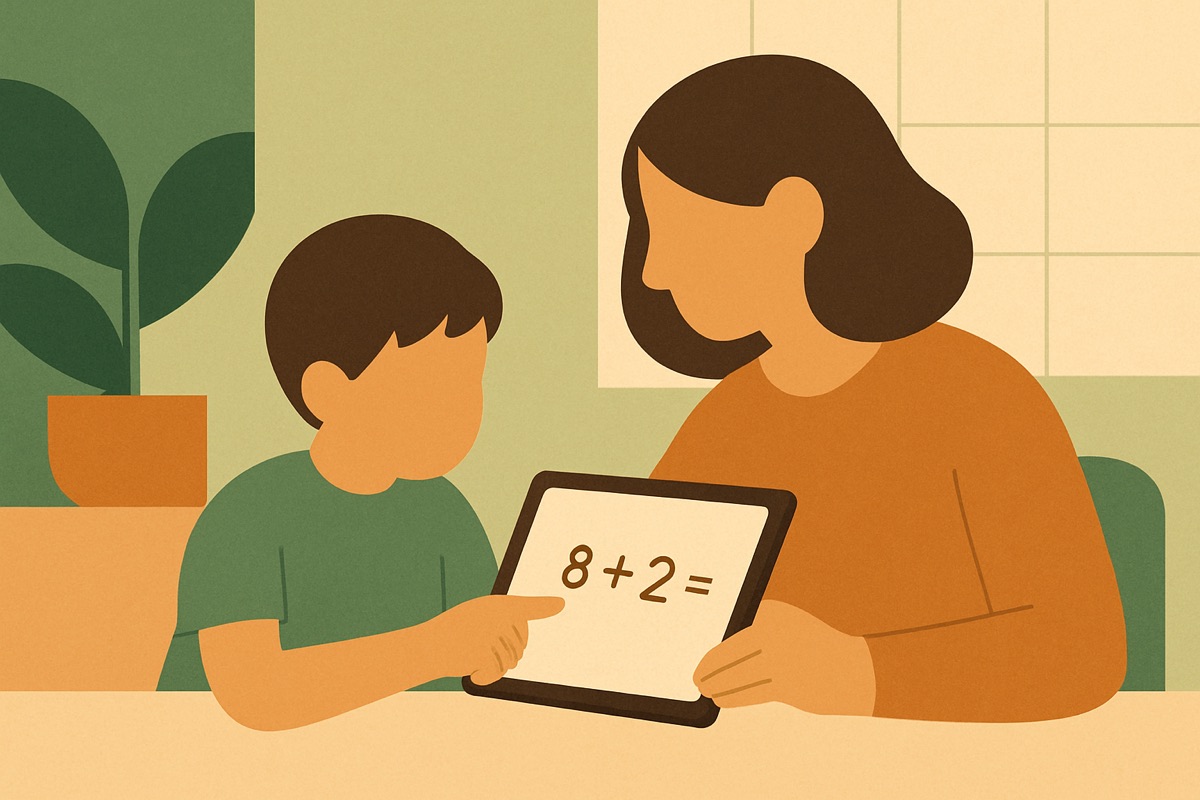
A parent showed me an app her daughter had been "doing math on" for an hour a day, thrilled that the screen time was educational. I watched the kid play for two minutes. She was tapping bubbles to pop them, and every so often a number floated by that she could ignore. There was a math problem buried in there somewhere, technically. Mostly she was popping bubbles and collecting coins. The word "educational" was in the app title. That was the whole basis for the claim.
So, is educational screen time good for kids? It can be. But the label "educational" is marketing, not a fact, and most of the apps wearing it are games with a thin coat of school paint. The good news is you don't have to guess. You can tell a real learning app from a costume in about five minutes if you know what to look at. Here's the test I give parents.
Watch what the kid actually does with their hands
Sit down and play the app yourself, or watch your kid play, and pay attention to one thing: what is the child physically doing most of the time? Are they thinking about a math problem and answering it? Or are they tapping, swiping, collecting, decorating, and dodging, with the occasional math question sprinkled in as a toll booth between the fun parts?
The bubble app failed this instantly. Ninety percent of the kid's actions were game actions. The math was a brief interruption she'd learned to rush through so she could get back to popping. If the learning is the boring part the kid endures to reach the reward, the app has its priorities backward. In a good app, the math is the activity, and the rewards come from doing the math, not from a separate game bolted on the side.
Check whether it responds to wrong answers
This is the fastest way to separate real from fake, and it takes thirty seconds. Get a problem wrong on purpose. Then watch what happens.
A weak app does one of two things. It either buzzes and moves on, or it just won't let you proceed until you tap the right one, turning the problem into a guessing game where you eventually hit the answer by elimination. Neither teaches anything. The kid learns to guess until the app stops complaining.
A good app treats the wrong answer as the moment that matters. It might show you why it was wrong, walk you through it, or bring that exact fact back a few problems later to see if it stuck. Learning happens at the mistake, not at the correct answer, so an app that wastes the mistake is wasting the whole point. When I vet an app, this is the first thing I check. Get one wrong and see if the app is paying attention.
Look for these signs of a real learning app
Once you've watched the hands and tested a wrong answer, a few more things tell you a lot fast:
- The difficulty adjusts. Get things right and it gets harder. Struggle and it eases up or reteaches.
- The reward is tied to doing the math, not to time spent or bubbles popped.
- There's no way to win by tapping randomly or grinding for coins.
- It targets a real skill you can name, not just "math" in general.
- It doesn't hammer you with ads or nag you to buy things every ninety seconds.
That last one matters more than people think. If an app interrupts a seven-year-old with a pop-up trying to sell an upgrade every couple of minutes, the people who made it care more about your wallet than your kid's learning, and that usually shows in the teaching too.
Beware the reward-for-nothing trap
The apps I trust least are the ones that shower kids with coins, gems, and prizes for barely doing anything. It feels great to the kid, which is exactly why it sells. But it teaches a bad lesson: that a pile of rewards is what you're after, and the math is just the obstacle in the way. A kid trained on that starts asking what he gets for every problem instead of caring whether he understood it.
Rewards aren't the enemy. A reward tied to genuine progress is motivating and fine. The problem is rewards handed out for volume, for time, for showing up, for tapping. That's grinding dressed up as achievement. We built Math Prizes around the opposite idea, that the reward should mean you actually learned something, and honestly that's the lens I'd want any parent to use on any app, ours included. Ask what the kid has to do to earn the good feeling. If the answer is "understand something," good. If it's "keep tapping," walk away.
The five-minute version
You don't need a checklist taped to the fridge. Just do this. Play it yourself for a couple of minutes and notice what your hands are doing. Get one problem wrong and see if the app cares. Check whether the fun stuff is a reward for learning or a distraction from it. That's the whole test, and it's usually obvious by minute three.
The mom with the bubble app switched her daughter to something where the kid actually answered problems and the app noticed when she missed. The screen time didn't change. The learning did. That's the thing to remember. Educational screen time can be genuinely good for a kid, but only when it's actually teaching. The label won't tell you that. Five minutes of watching will.