The Meltdown After the Tablet Goes Off: What's Actually Happening
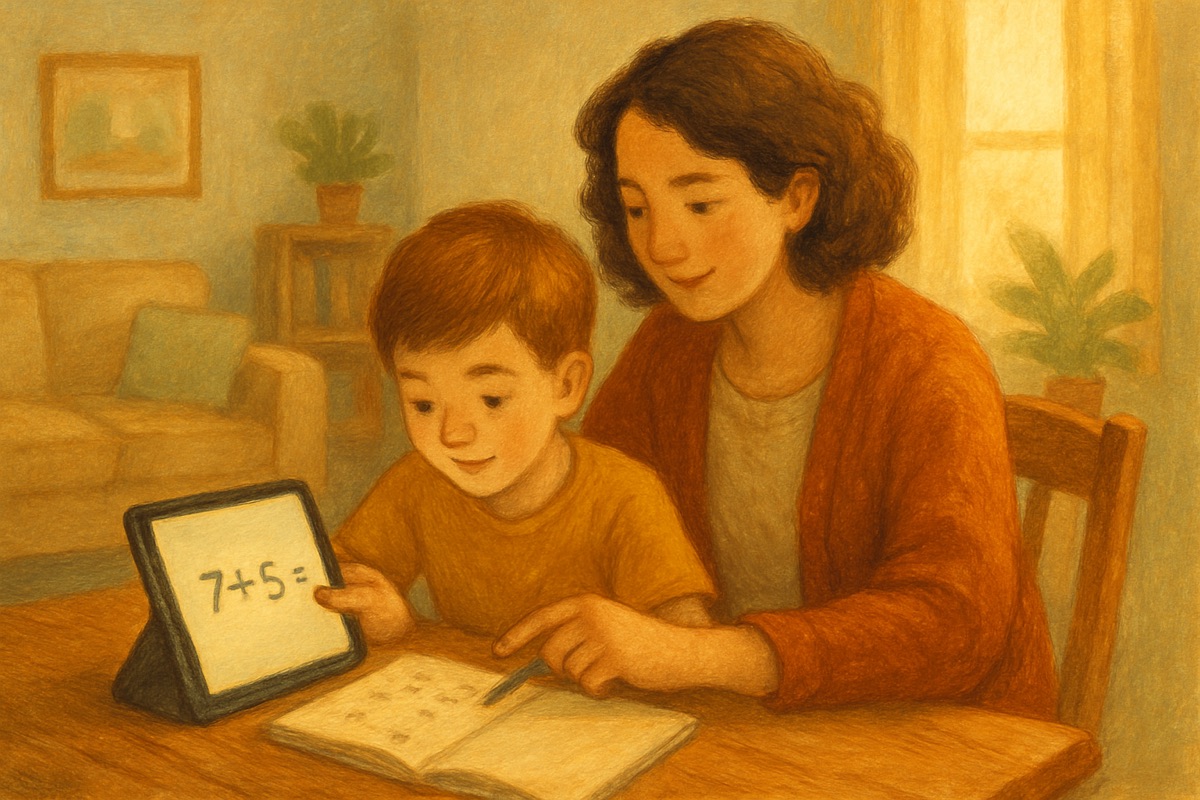
The five o'clock scream
You say "two more minutes." Two minutes later you take the tablet, and your normally reasonable seven-year-old comes apart. Full body flop, tears, "you always ruin everything." It feels wildly out of proportion to what just happened, which is that a cartoon paused.
If you've lived this, you're not raising a monster and you're not doing it wrong. The tablet tantrum after screen time is one of the most common things parents describe to me, right up there with homework tears. And it's not really about the tablet. Something specific happens in a kid's brain when a screen shuts off, and once you see it, the meltdown stops feeling like a personal attack and starts looking like a problem you can actually manage.
What the screen is doing to their brain
Games and shows built for kids are engineered to hold attention. Bright motion, quick rewards, a new thing every few seconds. That's not an accident, it's the entire business. While your kid is locked in, their brain is getting a steady drip of small hits of dopamine, the chemical tied to wanting more.
Then you take it away. The drip stops cold. There's no gentle fade, no landing. One second they're inside a fast, glittering world that keeps rewarding them, and the next second they're standing in a quiet kitchen where nothing is flashing and someone wants them to put on shoes.
A grown-up brain can absorb that gap. A young kid's can't, not smoothly. The part of the brain that manages impulses and big feelings, the prefrontal cortex, is still years from finished. So the crash lands with nothing to soften it. The meltdown isn't a decision. It's a nervous system that just got yanked off a high with no ramp down.
Why "two more minutes" backfires
Here's a hard truth about the classic warning. "Two more minutes" often makes things worse, not better, and I say that as someone who used it for years.
When a kid is deep in a game, "two minutes" doesn't register as a countdown to stopping. It registers as "not yet," which their brain hears as "keep going." Then time's up arrives as a surprise anyway, because they were never actually preparing to stop. They were just relieved to keep playing. The warning gave you the feeling of a fair heads up without giving them a real one.
What works better is a stopping point they can see coming inside the activity itself:
- "You can finish this level, then we're done." A finish line beats a clock.
- "One more episode, and it's the last one." Say it before you press play, not during.
- "When the timer dings, the show pauses itself." Let the device be the bad guy, not you.
The goal is to move the ending out of your mouth and into something the kid can track on their own. It's a lot easier to accept an ending you watched approach.
The handoff matters more than the limit
Parents spend a lot of energy fighting about how many minutes. I'd spend it on the handoff instead, the moment of coming off the screen. That transition is where the meltdown lives, so that's where the fix is.
A few things that genuinely help:
- Have the next thing ready. An empty transition is dangerous. "Tablet off, come stir the pancake batter" gives the brain somewhere to go. Snack, dog, backyard, a job, anything with a little momentum.
- Don't demand a good mood. Your kid can be grumpy about it. That's allowed. You're managing the behavior, not the feelings. "You can be mad. The tablet's still off."
- Stay boring and steady. Big reactions from you feed the fire. Flat and kind is the move. "I know. It's hard to stop. Shoes are by the door."
- Same routine every time. Predictability is calming. If the tablet always ends with the same landing spot, the brain stops treating the ending as an ambush.
I watched a dad handle this at a birthday party once. Timer went off, kid started to wind up, and he just said "yep, told you, snacks are outside" and started walking. Didn't argue, didn't linger. The kid huffed and followed. No scene. The whole thing was over in ten seconds because he didn't stand there and negotiate.
Real understanding beats a stricter rule
The instinct after a bad meltdown is to crack down. Less screen time, harsher enforcement, threats. Sometimes less time genuinely is the answer, especially right before bed or on packed days. But cracking down without changing the handoff usually just moves the fight, it doesn't end it.
What actually shrinks these tantrums over months is the same thing that helps kids anywhere: understanding, not just rules imposed from above. When a kid can name what's happening ("my brain wants more, that's why I feel yucky when it stops"), the feeling loses some of its grip. You can say this to a six-year-old in plain words. "Games are made to make you want more. That crummy feeling when it turns off is the game's fault, not yours. It goes away in a few minutes." Kids are relieved to hear the feeling is normal and temporary.
That's not permission to skip limits. It's giving them a handle on their own reaction, which is a skill worth more than any timer.
It gets better, mostly
Two things are true. Younger kids melt down harder, and this improves with age as the brain's brakes develop. And screens that are calmer to begin with, a slower app, a book on the tablet, a video with an actual ending, cause smaller crashes than the fast, endless stuff.
You won't get to zero tears. Some days the transition will be ugly no matter what you do, because your kid is tired or hungry or seven. But if you build a soft landing, hand off to a real activity, and stop expecting a cheerful goodbye to the tablet, the five o'clock scream gets quieter. It stops being the thing you dread every single evening.
The tablet turning off is a small loss to us. To them, in that moment, it's a real one. Treat it that way, keep the ending calm and predictable, and hand them something to land on.