The 5 Cs: A Simpler Way to Judge Screen Time Than Counting Minutes
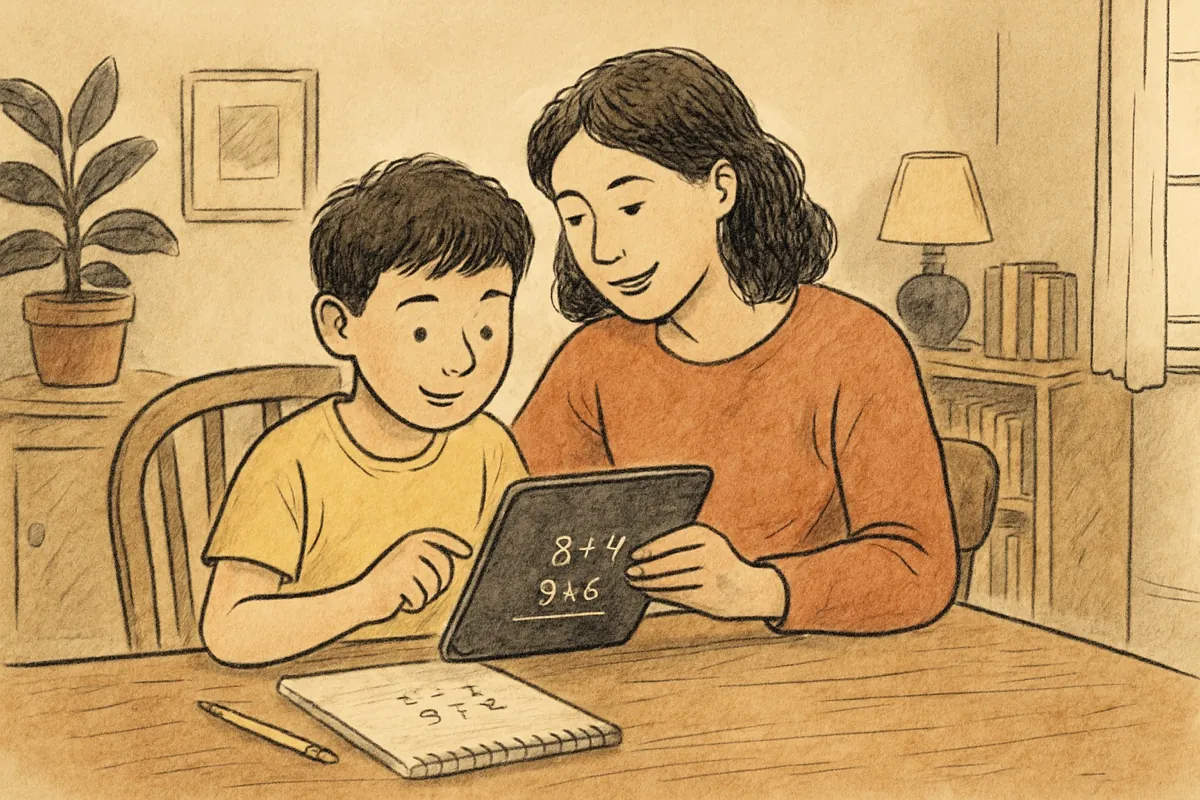
Two kids each spent ninety minutes on a tablet on Saturday. One built a little marble-run contraption in a physics sandbox, got stuck, asked her brother for help, and rebuilt it three times. The other watched a stranger open toys in identical thirty-second clips, ninety minutes straight, thumb tapping the whole time. Same number on the timer. Not remotely the same experience.
That's the problem with minutes. They're easy to count and they tell you almost nothing. If you want to know how to judge screen time in a way that actually reflects what it's doing to your kid, you have to look at what's happening during those minutes, not just how many there were. Here's a framework I share with parents, built around five questions that all happen to start with C.
Content: what is it, actually
The first question is the most obvious and the most skipped. What is your kid actually looking at? Not the app category in the store, not what the icon promises. The real thing on the screen.
Sit down next to them for five minutes, no phone in your hand, and just watch. A math app that walks a kid through why regrouping works is a completely different animal from one that flashes a hundred problems and rewards speed. A "learning" video channel might be genuinely explaining fractions, or it might be a guy yelling over game footage with a math skin painted on top. You can't tell from the label. You can tell in five minutes of watching.
Context: when and around what
The same show at 4pm and at 8:45pm are not the same. Screen time bleeding right up against bedtime wrecks sleep, and a tired kid the next morning pays for it. Screen time that replaces a meal, or that happens in a dark room alone for hours, sits differently than a show the family watches together after dinner.
Context also means what the screen is displacing. If tablet time is filling the fifteen minutes while you cook, fine. If it's eating the hours a kid would otherwise spend outside, building, reading, or being bored (boredom is not a crisis, it's where a lot of creativity comes from), that's the part to watch. It's less about the screen and more about what got crowded out.
Content creation vs. consumption
There's a real difference between a kid making something and a kid being fed something. Both can happen on a screen. One is far more active.
- Creating: building in a game, drawing, coding a little animation, making a video, solving problems that require actual choices.
- Consuming: watching clips, scrolling, tapping to collect rewards, passively absorbing whatever autoplay serves up next.
Neither is automatically evil. Kids need some downtime and passive watching is part of being a person. But a week that's all consumption and no creation is worth rebalancing. When you look at your kid's screen habits, ask roughly what the split is. If it's ninety-five percent consuming, that's the dial to nudge.
Calm: how do they come off it
This one's a gut check and parents already know the answer before I finish the question. How is your kid when the screen goes off? Some activities leave a kid basically fine, maybe a little "aww, already?" but they move on. Others leave a kid dysregulated, snappy, melting down over nothing for the next twenty minutes.
That difference is a signal about the thing they were using, not just about your kid's mood. Apps engineered to keep you hooked, endless feeds, games with a slot-machine reward rhythm, tend to produce the ugliest comedowns because they were built to make stopping feel bad. If one specific app reliably produces a tantrum on exit and another doesn't, believe the pattern. The app is telling you what it is.
Connection: is anyone else in it
Screens can isolate a kid or they can be something shared. A video call with grandma, a co-op game with a sibling, a show the whole family riffs on, all of that has a social thread running through it. An hour of that is genuinely different from an hour alone in a silent bubble.
You don't have to co-play everything. But building in some screen time that involves another human, even just you asking real questions about what they made or watched, changes the character of it. "Show me the thing you built" turns a solo session into a small conversation, and it also keeps you honest about the Content question from earlier.
How to actually use this
You're not going to run a five-point audit every day. That's not the point. The point is to stop treating the timer as the whole story and start noticing quality. Once or twice a week, glance at these:
- What's on the screen, really?
- When is it happening, and what's it replacing?
- Making something or just watching?
- How's the exit?
- Anybody else in it?
If most of those look decent, ninety minutes is probably fine. If most of them look rough, thirty minutes might be too much. That's the whole reframe. A good hour beats a mediocre twenty minutes, and no stopwatch will ever tell you which is which.
Think back to those two kids from the start. If I only knew the minutes, I'd have flagged both of them the same. Watching for five, I'd hand one the tablet again and gently steer the other toward almost anything else. The number lied. The five questions didn't.