How I Assess Where a Child Really Stands in Math at Home
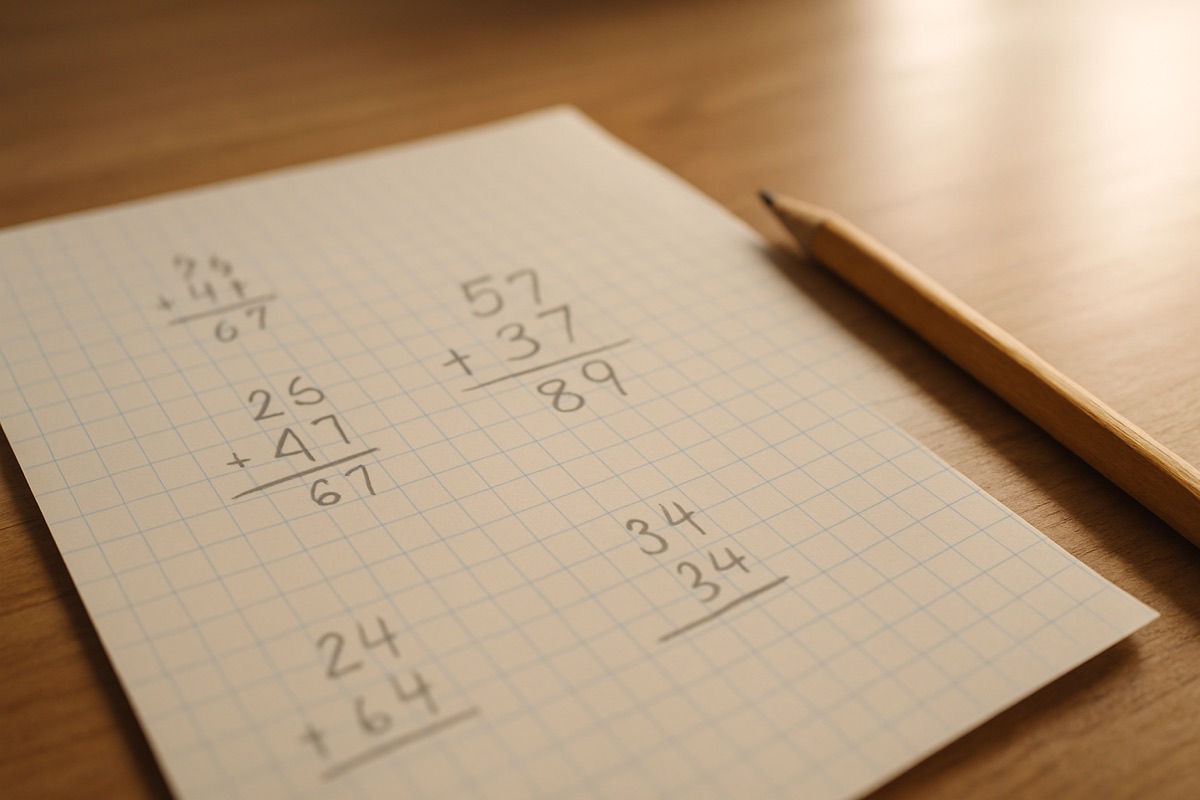
A dad once handed me his son's report card, a solid B in math, and asked me why the kid still counted on his fingers for 6 plus 7. The grade said one thing. The finger-counting said another. When I sat with the boy for ten minutes, the truth came out fast. He'd memorized enough to pass the tests and had no real feel for what the numbers meant. The B was hiding a gap you could drive a truck through.
That's why I never trust a grade alone to tell me where a kid is. If you want to assess your child's math level at home, you don't need a formal test, and honestly a formal test would tell you less than what I'm about to describe. You need a few short, low-pressure conversations where you listen to how they think, not just whether they land the right answer.
Watch how, not just whether
The single most useful thing you can do is ask a kid to solve a problem out loud and just listen. The answer barely matters. The method is where the truth lives.
Give a second or third grader 8 plus 5 and watch what happens. A kid who's solid will often say thirteen quickly, or you'll hear them do something clever like "8 plus 2 is 10, then 3 more, thirteen." A kid who's shakier will start at 8 and count up on their fingers, one at a time, five times. Both might get thirteen. They are not in the same place. The finger-counter is doing a lot of work to reach an answer the other kid just knows, and that extra load will crush them later when the problems get bigger.
So the question I'm always really asking is: how much effort did that take, and what did they lean on to get there? Effortless and flexible means it's solid. Slow, effortful, one-strategy-only means it's fragile even when the answer is right.
Go backward until it's easy
When I suspect a gap, I don't push forward into harder material. I go backward. I keep making the problems simpler until I hit the level where the kid is genuinely comfortable, the point where answers come without strain. That comfortable level is where they actually are, no matter what the grade says.
You can do this at the kitchen table. If your fourth grader is struggling with long division, don't hammer long division. Back up. Are the multiplication facts automatic? If 7 times 8 makes them freeze, that's your answer. Long division was never the problem. The missing facts underneath it were. Kids almost always struggle at the level above their first real hole, so the trick is to find the hole, not to drill the thing on tonight's worksheet.
A few things I probe when I'm going backward:
- Are basic facts automatic, or reconstructed every time?
- Do they understand place value, or just line up digits by habit? Ask what the 3 in 234 is worth.
- Can they explain why, not just do the steps? "How do you know?" is a great question.
- Do they fall apart the second a problem is worded differently than usual?
Word problems tell you the most
If I could only use one tool, it'd be a word problem. Bare arithmetic can be faked with memorization. A word problem can't, because the kid has to figure out what to even do before they do it.
Try something plain. "You have 12 stickers and you give 4 to your sister. How many are left?" Then watch. Does your kid immediately see it's subtraction, or do they grab the two numbers and guess an operation? A kid who says "I'll add them, twelve plus four" isn't bad at subtraction. They don't yet understand what the situation is asking, which is a different and more important thing. That gap between doing arithmetic and understanding what the problem needs is invisible on a worksheet of naked equations and glaring in a word problem.
Keep it low-pressure or you'll get bad data
Here's the part people skip, and it wrecks the whole thing. If your kid feels tested, you won't see their real math. You'll see their nerves. An anxious kid underperforms badly, and you'll walk away thinking they know less than they do.
So don't announce an assessment. Don't sit them down across a table with a stack of problems and a serious face. Fold it into normal life. Ask the division question while you're splitting a pizza. Ask about place value while they're counting out money for something at the store. Play a quick number game and pay attention to how they play. Some math apps quietly do a version of this, adjusting up and down to find a kid's real level without ever making it feel like a quiz, and that low-key approach is exactly why it works better than a pop test. The calmer the moment, the truer the picture.
And whatever you find, keep your reaction flat. If you gasp when your kid counts 6 plus 7 on their fingers, you've just taught them that finger-counting is shameful, and next time they'll hide it. You want them to keep showing you how they really think.
What to do once you know
Finding a gap isn't bad news. It's the good news, because now you can aim at the actual problem instead of the symptom. The dad with the B student stopped worrying about the grade and spent a few weeks just making the addition facts automatic, in short daily bits. Once those were solid, a lot of the finger-counting stopped on its own, and the math that came after got easier because it had something to stand on.
That's the whole reason I assess this way. Not to slap a level on a kid, but to find the one loose brick near the bottom of the wall. Fix that, and everything you stack on top holds a lot better than a report card grade would ever tell you.