Halloween Candy Math: Sorting, Trading, and Graphing the Haul
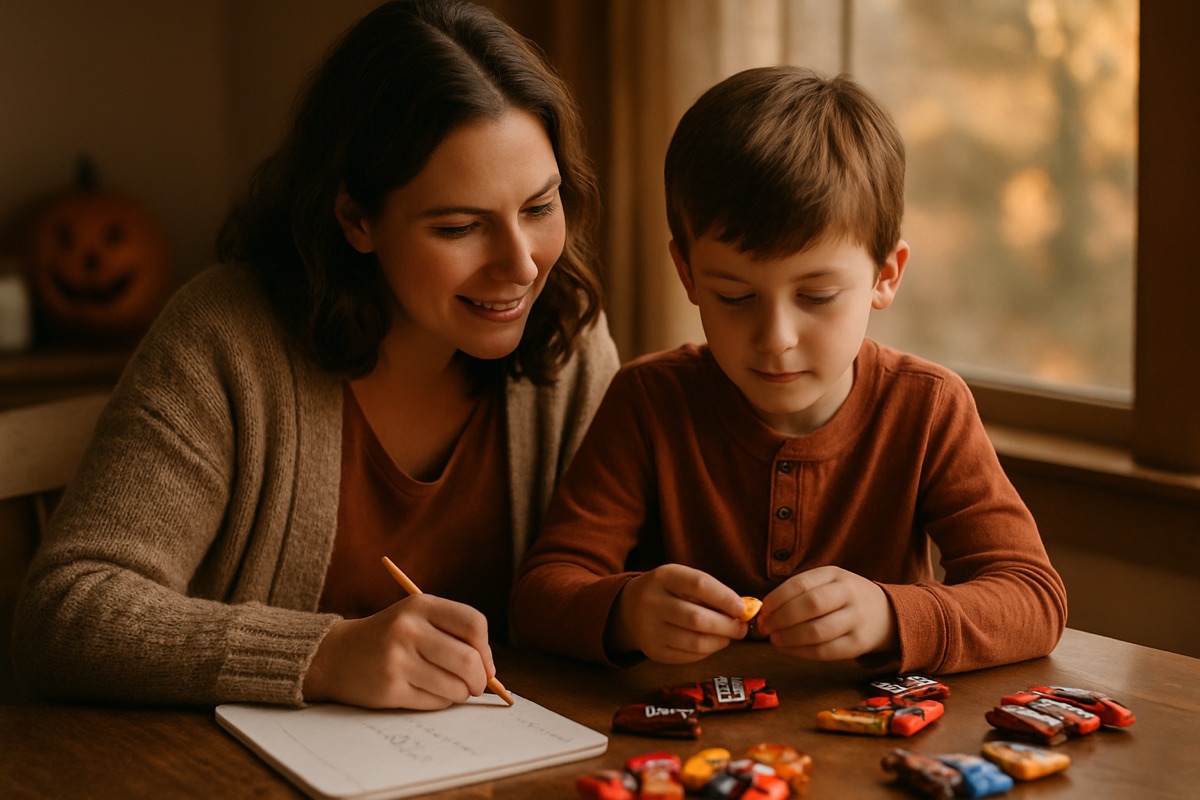
The night after Halloween, my own kid dumped his bucket on the kitchen floor and immediately started making piles. Not because I asked. He just wanted all the chocolate together and all the fruity stuff together and the weird black-and-orange wrapped ones in their own sad little group nobody would eat. That instinct to sort is math, pure and early, and it's the reason Halloween candy math activities work so well. The material is already there, the kid is already interested, and you don't have to invent a single problem. Dump the bucket. Let's use it before it disappears.
Sorting is the first move, and it's real math
Before you do anything clever, just sort. Sorting is a foundational math skill, the same brain move that later powers grouping, categorizing, and organizing data.
Ask your kid to sort the haul, but don't tell them how. See what rule they pick. Chocolate versus not chocolate. Big versus small. By brand. By color. Then, and this is the good part, ask them to sort it a completely different way. Switching the rule is where the thinking lives, because it means they understand that the same pile can be organized by more than one idea.
For little ones, four to six years old, sorting by two or three obvious groups is plenty. For older kids, push it. Sort by more than one rule at once, like chocolate that also has caramel. That's the beginning of the kind of categorizing that shows up in real data work later on.
Counting and comparing without a worksheet
Once the piles exist, they're begging to be counted, and counting candy beats counting worksheet dots because nobody has to be talked into it.
- Count each pile. Younger kids get one-to-one counting practice, touching each piece as they say a number and landing on the total. Have them line the pieces up in a row so nothing gets counted twice.
- Which pile is biggest? Comparing amounts is a core skill. Ask which pile has more before counting, just by looking, then count to check the guess.
- How many more? This is subtraction wearing a costume. "You have 9 chocolates and 4 lollipops. How many more chocolates?" A kid who won't touch a subtraction sheet will happily figure this out about their own candy.
- Count by groups. Older kids can bundle pieces into groups of five or ten and skip-count them. Ten piles of ten is a hundred, and suddenly place value is sitting right there on the table.
I once had a second grader who insisted she "couldn't do subtraction" tell me, without any prompting, that she had exactly six more mini candy bars than her brother. She'd done the subtraction in her head to win an argument. The candy did what my worksheet couldn't.
Trading turns candy into an economy
Here's where it gets fun, and where the math gets sneaky. Set up a trading session, either kid to kid or kid to parent, and let value do the teaching.
Agree on some exchange rates first. Maybe two small candies equal one big one. Maybe three lollipops trade for one chocolate bar. Now every trade is a little equivalence problem. If a full-size bar is worth four minis, how many minis does she need to give up for two bars? That's multiplication and ratio, and she's doing it because she genuinely wants that chocolate.
For older kids, assign point values to each candy type and let them build a "budget." They can trade up toward a favorite by spending lower-value pieces, which forces them to add, compare, and plan ahead. This is real reasoning, not memorized steps, because there's no single right answer, just better and worse trades. Kids who understand value make good deals. Kids who only memorized facts get fleeced by their siblings, and they learn quickly.
Graphing the haul
Now take all that sorting and counting and turn it into a picture, because reading and making graphs is a skill kids need and rarely get to practice on something they care about.
Grab paper and make a simple bar graph. Candy type across the bottom, number of pieces up the side. Your kid colors or draws a bar for each category based on the counts you already did. Little kids can even build a real bar graph by lining the actual candy up in rows on the table, one type per row, and just looking at which row is longest. That physical version is graphing you can touch.
Then ask questions off the graph. Which type did you get the most of? The least? How many more chocolates than lollipops, reading it straight off the bars? Are there any you got the same amount of? This is data interpretation, the exact skill behind reading charts in the news later, and it's landing on candy your kid personally collected, which makes the graph mean something.
Keep it playful, and keep the goal honest
A couple of ground rules so this stays fun. Don't turn it into a two-hour lesson. Twenty minutes of sorting, counting, and one graph is a great night, and then let them eat some candy, obviously. The moment it feels like homework, the magic's gone.
And keep the goal on understanding, not on cranking out problems for a prize. The win here isn't how many candy math activities you check off. It's that your kid felt, in their hands, that math is about organizing real stuff, comparing real amounts, and making smart trades. That feeling is what carries into the classroom, long after the last fun-size bar is gone. So before the bucket empties out, dump it on the table one more time. It's the best free manipulative you'll get all year.