Keeping Math Alive Over Winter Break Without Ruining the Holidays
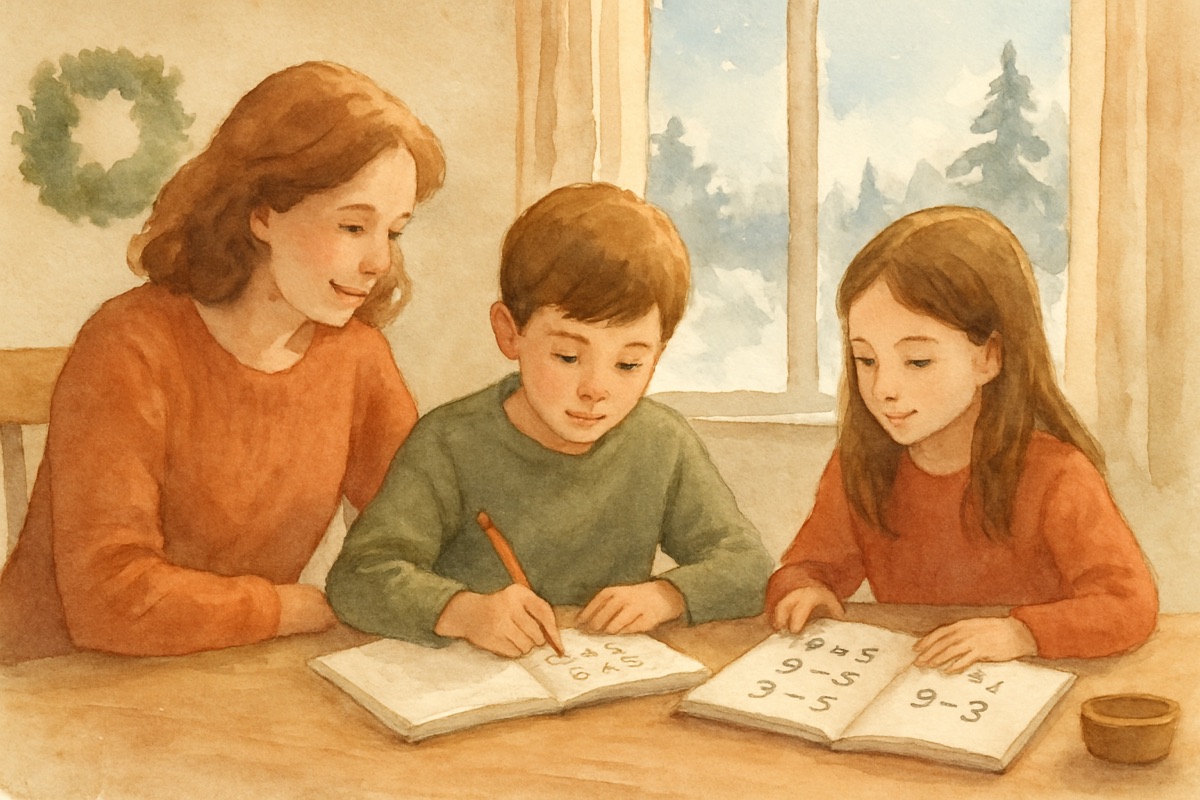
Every January I can tell who did zero math over the two-week break and who didn't. Not from a test. From how a kid holds a pencil over a subtraction problem on that first Monday back, like it's a snake that might bite. Two weeks of nothing, layered on top of holiday sugar and late bedtimes, and some kids come back genuinely rusty. So I understand why parents ask me about winter break math activities. The catch is that the wrong version of "keeping math alive" can turn a happy December into a nightly standoff, and that's a bad trade.
Here's my actual position after years of watching January arrivals. You do not need a workbook. You need about ten minutes of real math folded into things you're already doing. The kids who come back fine aren't the ones who did packets. They're the ones whose families kept counting, measuring, and playing.
Why the break matters (and why worksheets aren't the fix)
Learning loss over breaks is real, but it's not the disaster the workbook companies want you to believe. A short break doesn't erase what a kid understands. What it erodes is fluency, the speed and comfort of recalling facts, and confidence, which for a lot of kids is fragile to begin with.
The problem with the worksheet-a-day approach is that it treats the break like a punishment and math like a chore to grind through. You end up with a kid who resents math more in January than they did in December. That's the opposite of what you want. Real understanding sticks better than drilling anyway, and it doesn't cost you a fight.
Cook something together and let them run the numbers
The kitchen is the best math classroom I know, and it's already busy this time of year. Baking is fractions, doubling, and time all at once.
Have your kid actually do the math, not just watch:
- Doubling a cookie recipe means every fraction gets doubled. Two-thirds of a cup becomes what? Let them figure it out, mess it up, and fix it.
- Halving is even better because it forces real fraction thinking. Half of three-quarters is a genuinely good problem for a fourth grader.
- Timing multiple dishes for one dinner is scheduling math. If the roast needs 90 minutes and the rolls need 15, and dinner is at six, when does each thing go in?
A gingerbread house is geometry and estimation. How many gumdrops to line the roof? Guess first, then count. That guess-then-check habit is worth more than a page of problems.
Games that hide the practice
Board games and cards do quiet math work while everyone thinks they're just playing. A deck of cards and the game War teaches instant number comparison, which is exactly the skill some kids are shakiest on. Yahtzee is addition and a little probability. Monopoly is money, making change, and quick mental math, and a long rainy-afternoon game will sneak in more arithmetic than any worksheet.
Even something as simple as keeping score by hand instead of on a phone turns a game night into practice. Make your third grader be the scorekeeper. They'll add columns of numbers for an hour and never once think of it as math.
Money is everywhere in December, so use it
The holidays are drowning in money math, and most of us just do it in our heads and rob the kids of the reps. Don't.
Give your kid a small gift budget, real dollars if you can, and let them plan. If they have twenty dollars and want to buy something for grandma and something for their sibling, they have to add, subtract, and make choices with a hard limit. That's the most real math there is.
At the store, hand them the job of estimating the total before you check out. Round each item, add it up, see how close they got. Making change from a twenty is a skill a lot of kids have never practiced because everything's a card now. Let them count it back the old-fashioned way.
Keep it short and let the holiday be the holiday
Here's the part I most want parents to hear. The goal isn't to run a shadow school in your living room. It's to keep the machinery from rusting. Ten minutes of real, embedded math a few times a week is plenty. A cookie recipe on Tuesday, a card game on Thursday, and letting them handle the money at the store on Saturday will do more than a stack of packets and cost you no goodwill.
Protect the rest and errands. Some days the math is just counting how many days until a grandparent visits. That still counts. Do not let winter break math activities become the thing your kid dreads about the break, because a kid who comes back in January still liking math is worth more than one who came back a little faster and a lot more sour.
The kids who stroll into my room on that first Monday relaxed and ready aren't the ones who did the most. They're the ones who never fully stopped, and never once felt like they were doing homework at all.