A Realistic Summer Math Plan So Your Kid Doesn't Slide Backward
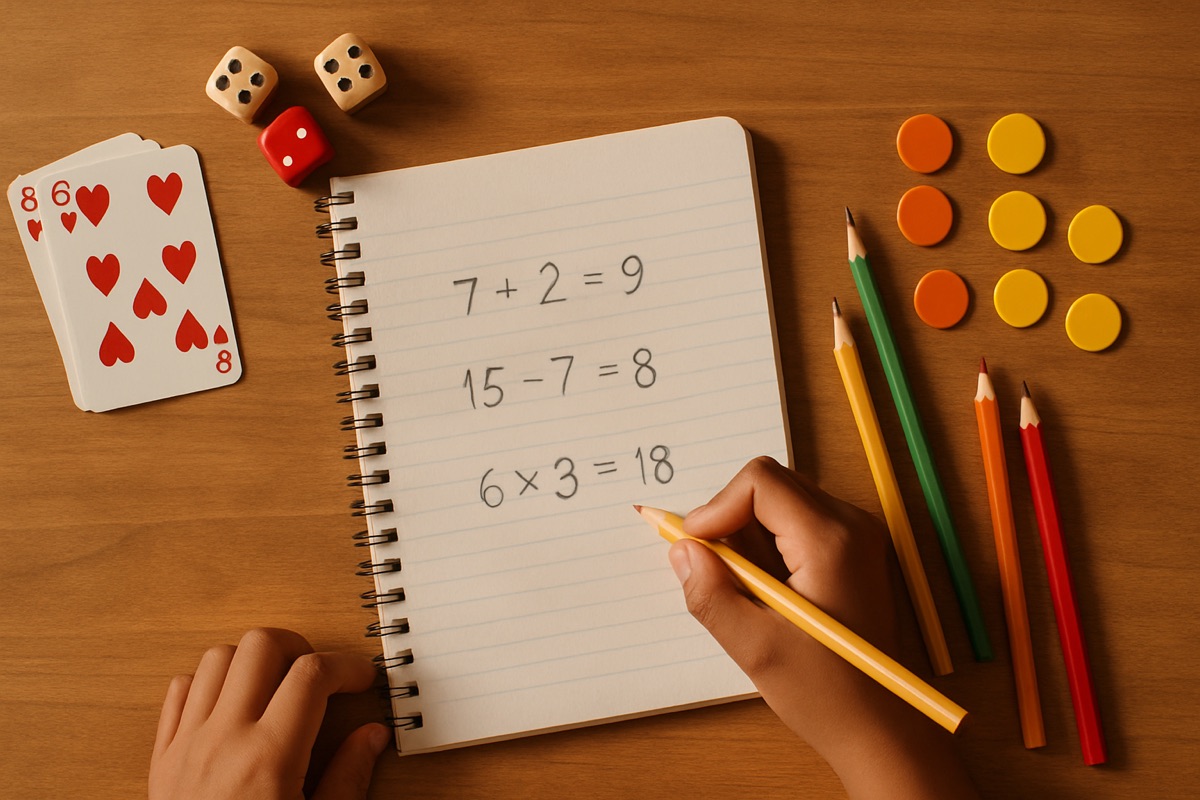
Every September for years, I watched the same thing happen in the first two weeks of school. Kids who'd finished June solid on their math facts would sit down in fall and count on their fingers for six times seven. Not because they'd forgotten how math works. Because they hadn't touched a number in eleven weeks. The slide is real, and it's frustrating, because it's so preventable. What most families lack isn't effort. It's a summer math slide plan that's actually realistic, one that doesn't turn July into a second school year and get abandoned by the Fourth.
So let me give you the plan I'd hand any parent who asked. It's small on purpose. The goal is to keep the machine warm, not to get ahead, and definitely not to sacrifice summer. Kids need the break. They just need the break to not cost them September.
The slide is smaller than the panic
First, calm down about it. The summer slide is real but it's not a cliff. A kid doesn't lose everything they learned. What fades is the fast, automatic stuff, the math facts and procedures that only stay sharp with occasional use. The deep understanding mostly stays put. That's good news, because it means you're not reteaching a grade. You're just keeping a few facts from going rusty.
This matters because it tells you where to aim. You don't need to cover new material or drag your kid through next year's textbook. You need light, occasional touches on what they already learned, so the automatic parts stay automatic. That's a much smaller job than it sounds, and it's the whole point of a good summer math slide plan.
Two or three times a week, fifteen minutes
Here's the dose. Not every day. Two or three times a week, fifteen minutes each. That's it. I'm being specific because vague plans die, and "do some math this summer" is a plan that dies by June 20th.
Fifteen minutes, a few times a week, does the job because you're maintaining, not building. Consider the difference:
- Daily hour-long worksheets: your kid revolts, you give up, nothing gets done by July.
- Nothing at all: the September finger-counting problem.
- Fifteen minutes, three times a week: boring, doable, and it works.
The middle path wins because it's small enough to actually happen. A plan you'll keep beats a better plan you'll drop. Pick your days loosely, maybe the mornings after breakfast before it gets hot, and keep the sessions short enough that nobody dreads them.
What to practice (and what to skip)
Aim at the stuff that goes rusty, not the stuff that's stable. For most elementary kids that means:
- Math facts. Addition and subtraction facts for the younger ones, multiplication and division for the older. These are the first things to fade and the easiest to keep warm.
- The procedure they just learned. Whatever the big skill was this past year, regrouping, long division, fractions, do a couple of problems now and then so the steps don't blur.
- Reading numbers in the wild. Prices, clock time, measuring for a recipe. This barely feels like practice and keeps number sense alive.
And what to skip: anything brand new. Summer is the wrong time to teach next year's material with no teacher and a kid who'd rather be in the pool. You'll both hate it and the school will teach it properly in the fall anyway. Maintain the old. Leave the new.
Make it not feel like school
The fastest way to kill a summer math plan is to make it feel like the school year with worse timing. Kids can smell a worksheet from across the house. So lean on the parts of summer that are already full of math and just point them out.
Cooking is math. Doubling a cookie recipe is fractions and multiplication without a single worksheet. A lemonade stand is money, making change, and figuring out profit. A road trip is time and distance and "how many more miles." Baseball is stats and averages if your kid's into it. I had a student one summer who got genuinely good at mental math because his family let him keep the running total at the grocery store, and he treated it like a game. That's fifteen minutes of real practice that felt like nothing.
When you do want something more structured, keep it light and let the kid feel their own progress. A well-made practice app can carry a few of the weekly sessions, especially one built to reward real understanding instead of just cranking out reps. Something like Math Prizes works fine here as long as it's a small part of the mix and not the whole summer. The screen isn't the plan. The steady, light touches are the plan.
When they land in September
Do this, loosely, across the summer, and here's what fall looks like. Your kid sits down that first week and the facts are just there. No finger-counting on six times seven. No blank stare at a regrouping problem they nailed in May. They're not ahead of the class, and that was never the goal. They're right where they left off, which puts them well ahead of the kids who took the full eleven weeks off.
That's the entire promise of a summer math slide plan, and it's a modest one on purpose. You're not buying a head start. You're just refusing to pay the September tax. Fifteen minutes, a few times a week, mostly disguised as cooking and car rides and grocery totals. The pool still happens. The lazy mornings still happen. The math just quietly keeps its edge in the background, which is exactly how summer math should work.