Vacation Budget Math: Let Your Kid Help Plan the Trip
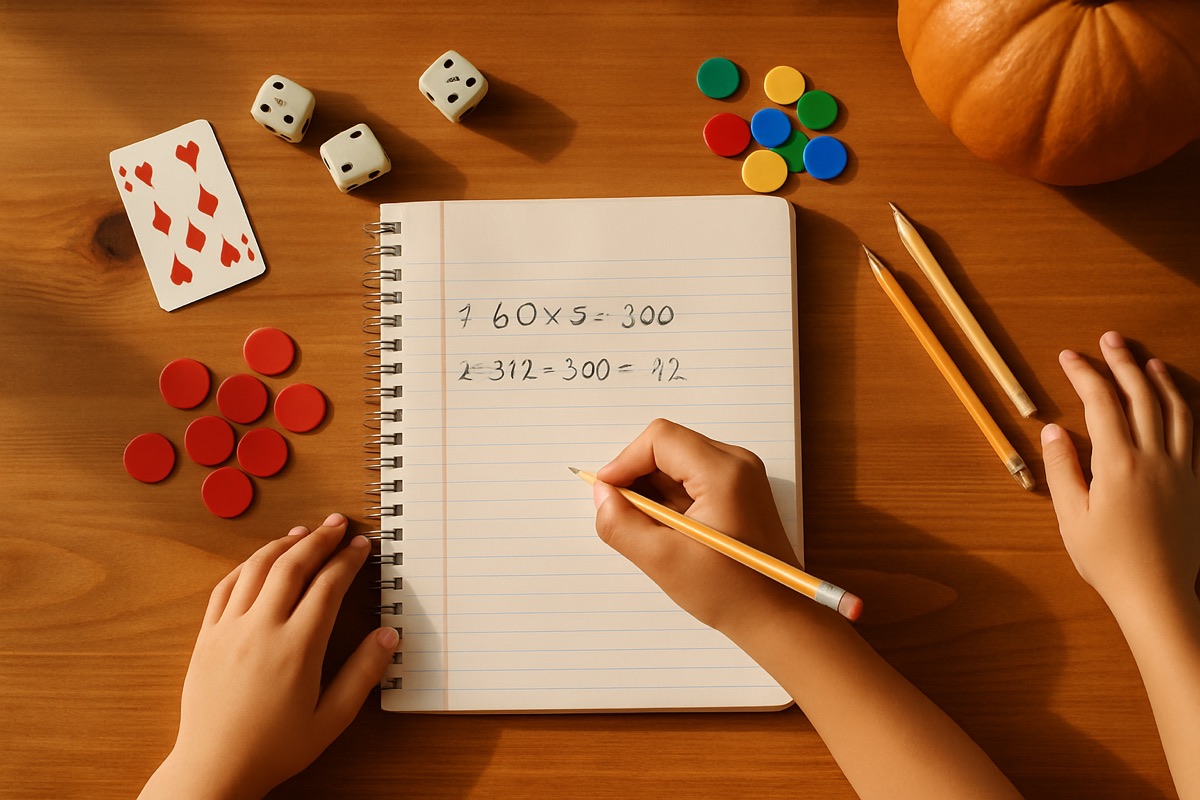
Last summer I gave my nephew forty dollars and told him he was in charge of snacks for a seven-hour drive to the coast. He is nine. He spent twenty minutes in the grocery aisle with a little notepad, adding up prices, putting things back, and doing the kind of careful subtraction I could never get him to do on a worksheet. He came out with change, a bag of pretzels he was proud of, and a real sense that money runs out if you are not paying attention.
That is the whole idea behind vacation budget math for kids. A trip is one of the rare times a family talks about real numbers with real stakes, and your child is already interested because the trip is fun. You do not have to invent a word problem. You just have to hand over a piece of the planning and let the math be the math.
Why a Trip Beats a Worksheet
A worksheet asks a kid to find the answer to someone else's question. Planning a trip asks them to decide something they actually care about. The difference matters more than most parents expect.
When my students do a pretend budget in class, they treat it like a puzzle with one right answer. When a kid budgets for a real trip, the numbers push back. If the aquarium tickets cost more than they thought, something else has to give. That trade-off is the part of math that sticks, because it is tied to a choice they made and a consequence they felt.
You are also handing your child a reason to be precise. Nobody wants to run out of snack money at hour five. Getting the total right suddenly feels worth the effort, which is the opposite of how most kids feel about problem number fourteen on a page of forty.
Match the Job to the Grade
You do not give a first grader the hotel budget. The trick is picking a slice of the planning that lands just above what they can already do easily. Here is roughly how I break it down:
- Kindergarten to first grade: Count out the quarters for tolls. Sort coins into a snack jar. Compare two prices and point to the bigger one. Keep the numbers under twenty.
- Second to third grade: Give them a small cash budget for one thing, like souvenirs or road snacks. Have them add up a short list and figure out the change. This is where subtraction with regrouping gets real practice.
- Fourth to fifth grade: Hand over a bigger category with a hard limit. "We have sixty dollars for two lunches on the drive down. Find us two places and keep it under sixty." Now they are estimating, comparing options, and working with money that has cents.
- Sixth grade and up: Let them touch percentages. Tip on a restaurant bill, sales tax on the souvenirs, or the difference between a hotel that includes breakfast and one that does not once you add the cost of eating out.
The point is not to cover every skill. Pick one job that stretches your kid a little, and let the rest of the trip stay a trip.
Real Numbers, Not Pretend Ones
The magic ingredient is that the money is real. When I ran a fake budget activity with my third graders, one boy "bought" a hundred dollar telescope for a two dollar camping trip because the numbers were imaginary to him. Give a kid actual cash or a real limit, and that stops happening fast.
If you are not comfortable handing over cash, use a running tally instead. Write the budget at the top of a sticky note on the dashboard. Every time you spend from that category, your child subtracts it and writes the new total. My nephew did this for the snack fund and checked it about six times, which is six more subtraction problems than he would have done willingly at the kitchen table.
A few things that keep it honest:
- Let them actually make the call, even when their math leads somewhere you would not have chosen. If they blow the snack budget on gummy worms, the empty wallet at hour six teaches more than any lecture.
- Do not correct every small error out loud. If the total is off, ask them to check it again before you jump in. The re-check is where the learning happens.
- Round with them out loud in the car. "That was about seven dollars, so we have around thirty-three left." Estimation is a real skill, and kids pick it up by hearing you do it.
What Kids Actually Learn
The obvious answer is arithmetic, and yes, there is plenty of addition and subtraction hiding in a trip. But the deeper thing is that money is finite and choices cost something. A kid who has budgeted forty dollars of snacks understands scarcity in a way that no story problem delivers.
They also learn to keep track of a number over time, which is harder than it sounds. Holding "we have twenty-two dollars left" in your head while you shop is working memory plus subtraction plus a little planning, all at once. That combination is exactly what math class is trying to build, and a trip gives them a full day of reps without a single worksheet.
And they learn that being careful pays off. When my nephew came out of that store with change in his hand, he was genuinely pleased with himself. Not because someone told him "good job," but because the numbers worked out and he could see it. That is the kind of reward that actually motivates a kid to do the math right the next time, instead of just racing to be done.
Keeping It Light
One warning. This can tip into a math lesson your kid did not sign up for, and then the whole thing backfires. Watch for the moment their eyes glaze over and stop. The goal is a couple of real, concrete math moments per day, not a running seminar in the back seat.
I keep it to one job per kid and let the rest of the vacation be a vacation. My nephew did snacks. That was it. He was not also calculating gas mileage and hotel taxes, because he is nine and it was supposed to be a fun drive to the beach.
If you only do one thing this summer, hand your kid a small budget and a real decision, then get out of the way. The pretzels will taste better because he picked them, and the subtraction will have meant something. That is more than most of us got out of a math class at that age.