The Quiet Cost of Background TV for Kids Who Are Trying to Learn
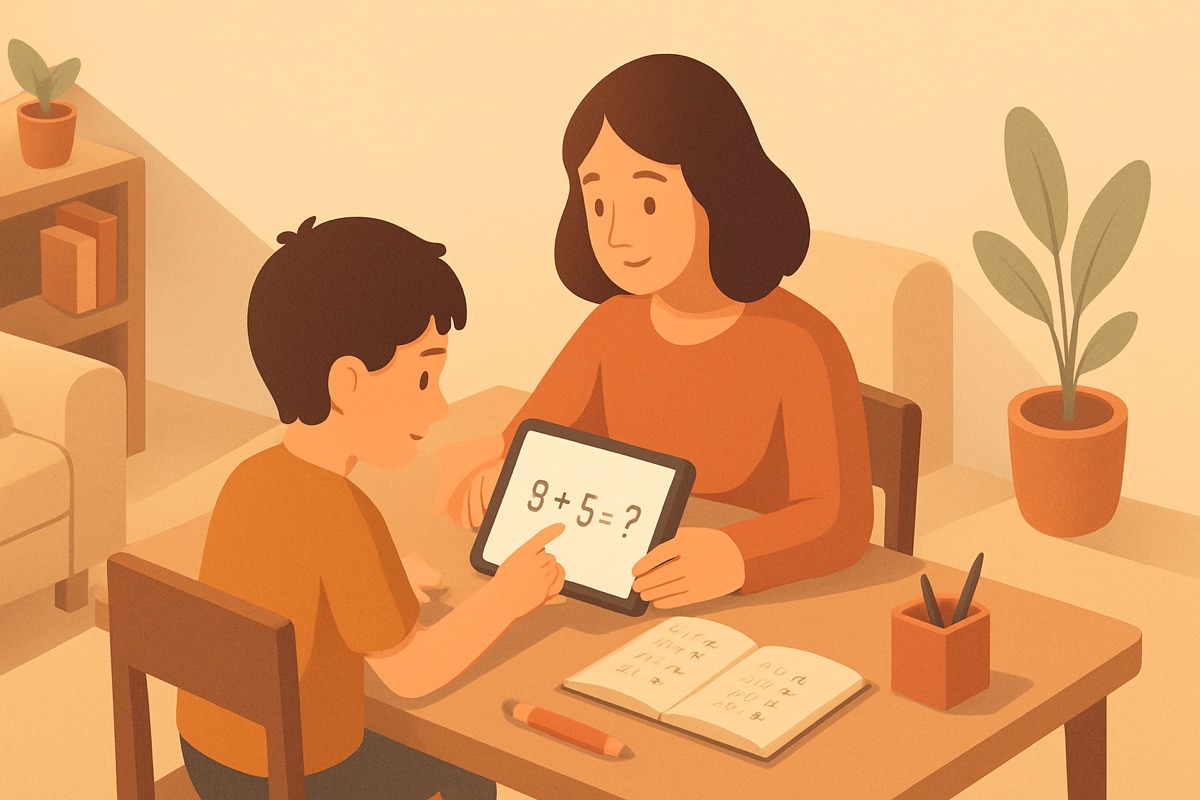
A mom told me her son "just can't concentrate on his math homework," and asked whether he needed to be tested for something. I asked a simple question. Where does he do the homework? At the kitchen table, she said, while the TV plays in the next room, because nobody's really watching it, it's just on. And there was most of the answer, sitting right in the living room. Background TV and kids trying to learn are a bad match, and it's one of the easiest things to fix.
The tricky part is that background TV feels harmless. Nobody's glued to it. It's just noise and light in the corner. But "nobody's watching" is not the same as "nobody's affected," and for a kid working through a page of problems, the difference is enormous.
Why "background" doesn't mean "ignored"
A television is built to grab attention. Bright cuts, sudden music, a laugh track, a voice going up at the end of a sentence. Even when a kid isn't watching, some part of their brain keeps checking in, because our attention is wired to notice movement and sound. Every one of those little check-ins is a small tax on focus.
For a kid doing math, that tax is expensive. Working a multi-step problem means holding several things in your head at once. What was the remainder, which number carries, what the question even asked. Each time the TV yanks a sliver of attention away, some of that mental scratch paper gets wiped, and the kid has to rebuild it. That's why a problem that should take two minutes stretches to ten, with a lot of "wait, where was I" in between.
I've seen this in my own classroom on the loud days, when construction is going next door. The exact same kids who breezed through a worksheet on a quiet Tuesday will stall on an easier one Wednesday, not because the math got harder, but because they're spending focus on tuning out the noise.
What it costs a kid who's already struggling
Here's the part that stings. Background TV hurts the kids who can least afford it. A child who finds math easy has focus to spare, so a little distraction just slows them down. A child who's already working hard to keep the steps straight has no slack, and the noise pushes them over the edge into frustration.
That frustration is where the real damage happens, and it's not about the one worksheet. A kid who fights through distraction night after night, getting problems wrong they'd otherwise get right, starts to believe the problem is them. "I'm bad at this." "I can't focus." They build a story about being a slow or broken student, when the actual culprit was a screen playing to an empty couch.
Real learning needs a kid's full attention on the thinking, not half their attention on the math and half on tuning out a sitcom. There's no shortcut around that, no app or trick that makes a distracted brain absorb math anyway.
Small changes that make a real difference
You don't have to ban television or turn the house into a library. A few practical moves cover most of the gain.
- Turn the TV off during homework, not down. Lowering the volume still leaves the flicker and the sudden sounds. Off is a different world.
- Give homework a spot away from the main screen. A bedroom desk, the far end of the table, even a corner facing a wall. Distance helps.
- Do your own quiet thing nearby. Read, fold laundry, pay bills. A kid focuses better when the adults around them are calm and off their screens too.
- If you need noise, try quiet instrumental music with no words. Lyrics compete for the same language part of the brain that reading and math problems use. Wordless music mostly doesn't.
None of these cost money, and you can start tonight. The kid who "can't concentrate" often turns out to concentrate fine once the corner of the room stops competing for their brain.
A short experiment worth running
If you're not sure the TV is the issue, test it. Pick two homework nights this week. One with the usual background TV, one with everything off and a quieter spot. Don't announce it as a big deal, just quietly change the setup and notice how long the work takes and how many meltdowns you get.
Most parents who try this are surprised by the gap. The math didn't change. The kid didn't change. The room did. And once you've seen a page of problems go from a forty-minute battle to fifteen calmer minutes, it's hard to leave the TV on again. That quiet in the room turns out to be worth a lot.