Weekend Screen Time Without the Guilt: A Loose Plan That Works
Saturday, 7:15 in the morning. My own kid is on the couch, tablet already glowing, and it's still dark outside. If nobody says anything, that tablet will be a fixture until lunch, and by noon he'll be foggy and grumpy and somehow more tired than when he woke up. That specific stretch, the unsupervised weekend morning, is where most screen time goes sideways. Not the amount exactly. The way it swallows the whole front of the day before anyone's made a choice about it.
So let me offer something that's held up in my house and in the homes of families I've taught for years. Not a rigid system. Weekend screen time for kids works better with a loose plan than a strict one, because strict plans invite a fight every single weekend and loose ones just become the rhythm of the house.
Stop counting minutes, start shaping the day
The stopwatch approach fails for a predictable reason. You set a timer, it goes off mid-episode, the kid negotiates, you cave or you enforce it and everyone's mad, and you do this whole dance again tomorrow. The number was never the real problem.
What actually matters is where screens sit in the shape of the day. A kid who watches two hours after a morning at the park, lunch, and some time outside is in a very different place than a kid who watched the same two hours first thing, in the dark, before doing anything else. Same minutes. Completely different day.
So I stopped counting and started sequencing. Screens come after certain things, not before them. The amount mostly takes care of itself once the order is right.
The one rule that does the heavy lifting: earn the couch first
Here's the whole system, more or less. Before the screen turns on, a few real-world things happen. In my house it's roughly:
- Eat actual breakfast at the table.
- Get dressed, teeth, the usual.
- Do one thing with your body. Bike, yard, walk the dog, anything that isn't sitting.
- One useful thing. Make your bed, help with a chore, whatever fits.
None of it is punishing. It's maybe forty-five minutes of ordinary living. But it means the screen shows up mid-morning instead of at dawn, and by then the day already has some shape to it. The kid isn't starting the weekend as a puddle on the couch. They're starting it as a person who did some things and is now taking a break.
This flips the whole feeling of it. Screens become the reward for a normal morning instead of the thing you're constantly clawing back.
Pick a rough end, not a hard timer
You still want a stopping point, but make it a landmark, not a countdown. "Screens off when we leave for Grandma's" or "off at lunch" beats a timer for one reason: a kid can see it coming. A timer feels like it ambushes them. A landmark they can plan around.
Give a real heads-up too. "Ten more minutes, then we're done" said once, and then actually done. The warning is not a negotiation opening. It's a courtesy so they can hit a save point instead of getting yanked out of something. Yanking is what causes the meltdown, not the ending itself.
Not all screen time is the same, and kids know it
Two hours of a kid building something in a game, following a long-form tutorial, or playing something that makes them think is not the same as two hours of autoplay short videos that leave them jittery and empty. You can feel the difference in how they act when it's over.
The short-video feed is the one to watch. It's engineered to never give a natural stopping point, so the kid never feels finished, just interrupted. Games with levels, shows with episodes, anything with a built-in end, those are easier to walk away from because they have edges. I don't ban the feed stuff, but I keep it on a shorter leash than the things with a natural shape.
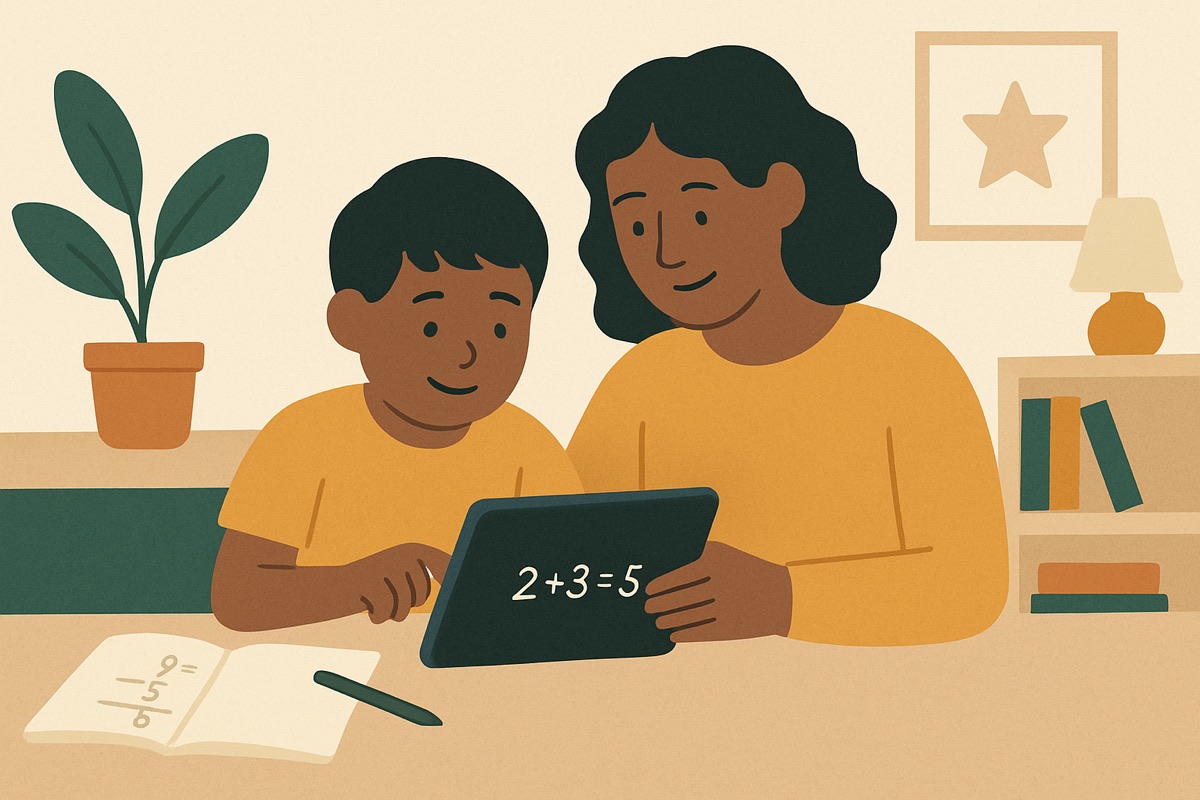
And if some of that time is a kid genuinely learning something, a real practice app or a project they're into, that sits in a different category for me than pure entertainment. Not screen time to be minimized, just time spent, same as reading. My own kids use a math app on weekends and I don't count it against the couch budget, because it isn't the couch.
Let go of the guilt, seriously
Here's the part I most want parents to hear. A weekend where your kid had a few hours of screens, plus some outside time, plus a meal together, plus a little boredom, is a good weekend. It is not a failure. The guilt is often worse for the household than the screens are.
The families I see struggle most aren't the ones whose kids watch too much. They're the ones locked in a constant low-grade war about it, where every Saturday is a battle and everyone's tense. The kids in those homes aren't watching less. They're just watching it with a fight attached.
Boredom is fine, by the way. A kid who's a little bored on a Sunday afternoon is a kid who might build a fort or pick up a book or invent some game with the couch cushions. Don't rush to fill every gap. The best weekend moments usually show up right after "I'm bored," if you can hold your nerve and not hand over the tablet to make it stop.
The rhythm you're actually building
Give this a few weekends and it stops being a plan you enforce and starts being just how the weekend goes. The kid gets up, does the morning things, earns the couch, watches for a while, and moves on to the rest of the day. No timer, no war, no dawn tablet in the dark.
That's the whole aim. Not a perfect number of minutes. A weekend that has some living in it before the screen shows up, and a kid who isn't fighting you for control of every hour. Get the order right and the amount stops being the thing you worry about.