Teaching Kids to Type: When to Start and How to Make It Not Boring
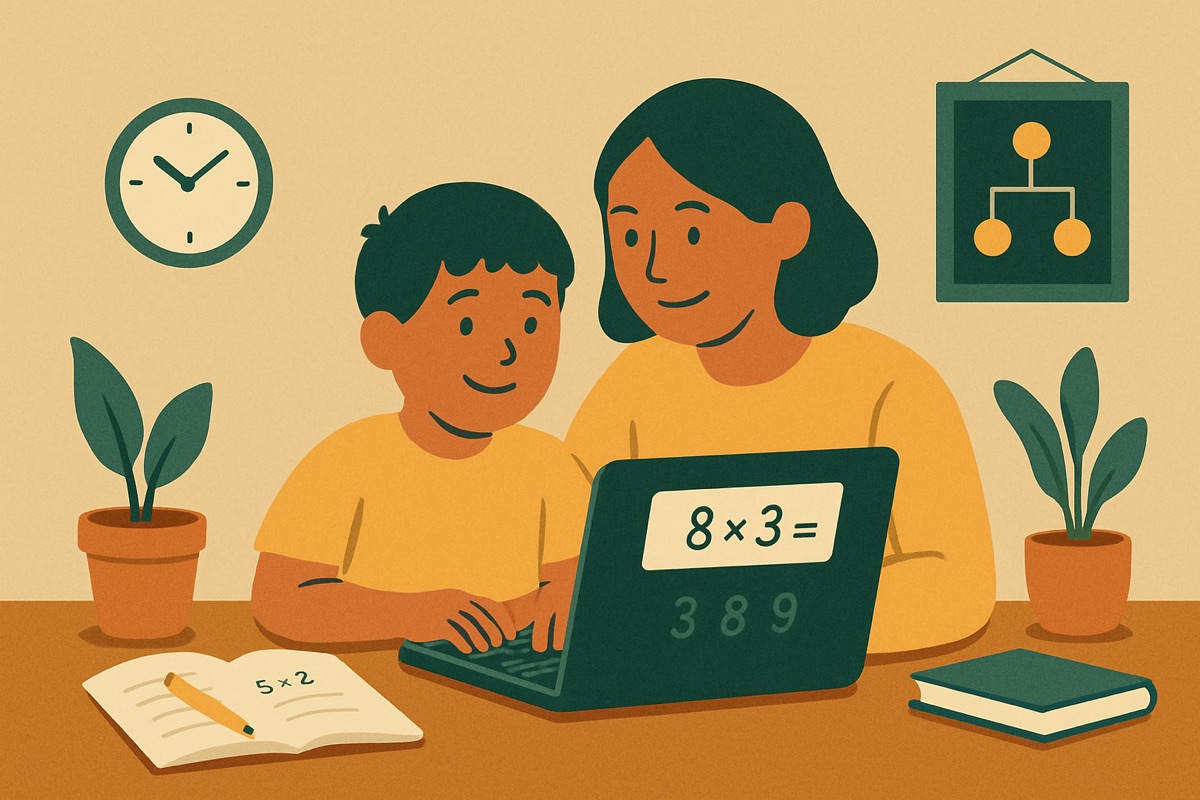
My nephew, at eight, could type a full sentence using exactly two index fingers, eyes locked on the keyboard the whole time, at roughly the speed of a slow drip. He was fast for a two-finger typist. That's the trap. Kids get good enough at hunt-and-peck that they never see a reason to learn the real thing, and the bad habit sets like concrete.
Teaching kids to type well is one of those skills that pays off for the next sixty years, and almost nobody plans for it. It just sort of happens badly, on its own, unless a grown-up steps in. So let me lay out when to start, why timing matters, and how to keep the practice from becoming the kind of chore your kid dodges.
When to actually start
The honest answer is around third grade, give or take. Here's the reasoning.
Before about age eight, most kids' hands are simply too small to reach across the keyboard comfortably with proper finger placement. You can start them earlier, but you'll be fighting their hand size, and frustration at this age can sour them on the whole thing. Let them peck around and get familiar with where letters live, sure. Don't push formal technique yet.
Around third or fourth grade, two things line up. Their hands can reach, and school starts asking them to type actual assignments. That's the sweet spot. They're motivated because there's a real reason, and they're physically ready. Waiting much past fifth grade isn't a disaster, but by then the hunt-and-peck habit is deeply grooved and harder to undo.
Break the eyes-down habit first
If you fix one thing, fix this: get their eyes off the keyboard.
The single biggest difference between a real typist and a hunt-and-peck typist isn't speed, it's where they look. A kid who watches his fingers can never go faster than he can find the next key. A kid who watches the screen builds muscle memory in his hands, and muscle memory is the whole ballgame.
This is uncomfortable at first and you have to warn them. Tell your kid it will feel slower and worse for a week or two, and that's normal, because they're trading a fast bad habit for a slow good one that becomes a fast good one. A cheap keyboard cover or even a dish towel draped over their hands works fine to stop the peeking. It feels silly. It works.
Home row is the anchor, keep it simple
You don't need a curriculum. You need one idea taught well: the home row.
The fingers rest on A-S-D-F for the left hand and J-K-L and the semicolon for the right. Most keyboards have a little bump on the F and J keys precisely so a typist can find home row without looking. Show your kid those bumps. It's a small thing, but kids love that the keyboard has a secret built in for exactly this.
From there, keep the scope tiny at first:
- Start with just the home row keys until they can hit them without looking.
- Add the row above, then the row below, one at a time.
- Do not chase speed yet. Accuracy first. Speed is a side effect of accuracy, never the other way around.
- Short and daily beats long and occasional. Ten focused minutes four times a week will outrun an hour once a week, every time.
That last point is the one parents get backwards most. Typing is a physical skill, like a free throw. The hands need frequent, short reps to build the memory, not a marathon session that leaves everyone annoyed.
Making it not boring
Straight typing drills are deadly dull, and a bored kid learns nothing. So the goal is to hide the practice inside something they want to do.
The good typing games for kids work because they turn accuracy into a goal the kid actually cares about, like defending a base or racing a car, where typing the right letters is how you win. The trick is that the game rewards real skill, not just mashing. Watch for a minute before you commit. If your kid can win by hammering random keys, it's junk and it's teaching bad habits. If winning requires hitting the right letters cleanly, it's doing the job.
But the best motivator isn't a game at all. It's a real reason to type. A kid who wants to write a story about his dog, or message a grandparent, or make a list of everything he'd buy with a million dollars, will type far more willingly than a kid drilling nonsense words. Give the skill a destination. "Let's type up that comic idea you had" gets more practice than "let's do typing" ever will.
Set the goal honestly
Don't fixate on words per minute. A fluent adult types somewhere around 40 to 60 words a minute, and expecting that from a nine-year-old just sets everyone up for disappointment.
For an elementary kid, the real goal is simpler and more useful: can they type without staring at their hands, using more or less the right fingers, at a pace that doesn't frustrate them out of writing? If a kid can get his thoughts onto the screen faster than he can lose them, the typing is no longer the bottleneck. That's the finish line that matters. The speed keeps climbing on its own for years afterward.
Here's the part I'd hold onto. The kid who learns to type properly at eight or nine barely remembers learning it by the time it matters. It's just there, quietly, doing its job in the background of every essay and email for the rest of their life. Spend a few boring weeks on it now, keep the sessions short and the reason real, and you've handed them a tool they'll use forever without ever thinking about it again.