Skip Counting Is the Warm-Up Your Child Needs Before Multiplication
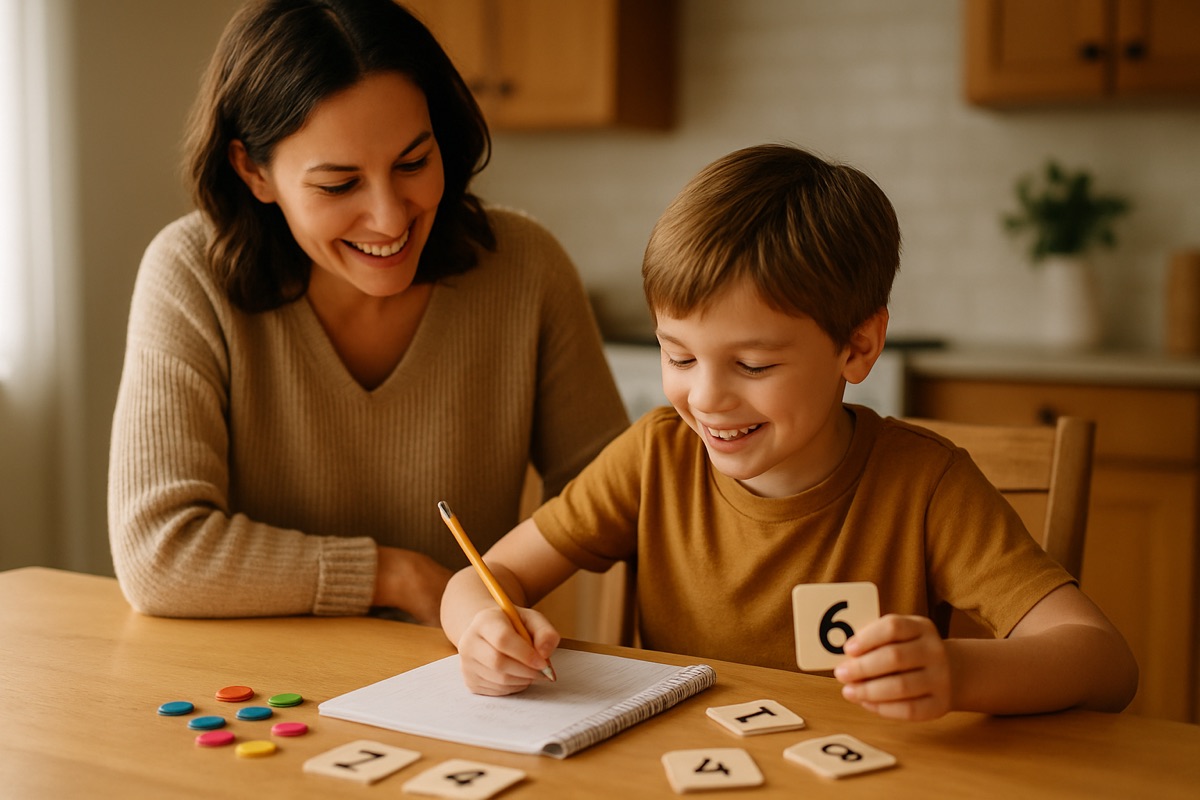
The kid who could count by tens but froze at times tables
I had a second grader named Theo who could count by tens all the way to two hundred without slowing down. He'd do it while packing up his backpack, half singing it. Then a few months later, when his class hit multiplication, that same boy stared at "10 x 4" like it was written in another language. The frustrating part is he already knew the answer. He just didn't know he knew it, because nobody had shown him that counting by tens and multiplying by ten were the same thing wearing different clothes.
That gap is exactly what skip counting fixes. Using skip counting to learn multiplication isn't a cute preschool activity you leave behind. It's the bridge between counting, which your child has been doing since they were three, and multiplication, which otherwise arrives as a scary wall of facts to memorize cold. Skip counting gives them a running start. By the time the times tables show up, a big chunk of the work is already done, and it's sitting in their memory as a rhythm instead of a list.
What skip counting actually is
Skip counting is counting by a number other than one. Count by twos and you get 2, 4, 6, 8. Count by fives and you get 5, 10, 15, 20. Count by threes and you get 3, 6, 9, 12.
Now look at what happens when you line that up with multiplication:
- The fifth number you say when counting by threes is 15. That's 3 x 5.
- The fourth number when counting by fives is 20. That's 5 x 4.
- The sixth number when counting by twos is 12. That's 2 x 6.
Multiplication is just skip counting where you keep track of how many jumps you took. Once a kid sees that, the whole subject stops feeling like a memory test and starts feeling like something they can figure out. And figuring it out, even slowly, beats a memorized fact they don't understand. A kid who can skip count their way to 7 x 6 will get there. A kid who only ever memorized it will be lost the second they blank.
Start with the friendly numbers
Not all times tables are equally hard, so don't start with the hard ones. The twos, fives, and tens are the friendly ones, and they're friendly precisely because they're easy to skip count.
Fives and tens click fast because kids see them everywhere. Nickels, dimes, the clock, counting by fives on their fingers. Twos are just the even numbers, which most kids can already rattle off. Start there and let your child feel successful, because that early confidence is what makes them willing to tackle the sevens and eights later.
Threes and fours come next. These take a little more practice, but they're still short enough sequences that a kid can hold them. Save sixes, sevens, eights, and nines for last. By then your child has the pattern down and, more importantly, they've learned a trick: if you know your fives, seven times five is just skip counting five, seven times, or noticing that seven fives is the same as five sevens.
How to practice it without a worksheet
This is the good news. Skip counting is one of the easiest things to practice because it needs zero materials and fits in the cracks of an ordinary day. Here's what worked in my classroom and at my own kitchen table.
- Count out loud together on the stairs. One number per step. Count by twos going up, by threes coming down.
- Use whatever's in the pantry. A dozen eggs is 2, 4, 6, 8, 10, 12. A muffin tin with six cups counted twice is your six times table starting.
- Count the wheels. Every car has four. Two cars, count 4, 8. Four cars, 4, 8, 12, 16. Kids love this one because it feels like a game, not math.
- Clap or drum the rhythm. Skip counting has a beat, and kids remember beats. My students learned their threes faster once we clapped it.
Five minutes a day beats a forty-minute drill session once a week. The goal is that the sequence gets so worn-in it comes out without thinking, the way Theo's count-by-tens did.
Why this beats flashcards for fluency
I'll be honest about flashcards, because plenty of parents reach for them first. They have a place, but they teach one thing: this specific fact equals this specific answer. There's no structure underneath. When a kid forgets 6 x 8, a flashcard gives them nothing to fall back on. They're just stuck.
Skip counting builds the structure. A kid who's fluent in skip counting has a way to reconstruct any fact they blank on, and every time they reconstruct it, the fact gets a little more permanent. That's real fluency. It's not the same as speed. Speed without understanding is a house with no foundation, and it falls apart the first time a problem looks slightly different from the flashcard.
The mastery you actually want is the kind where a kid can wobble on a fact, catch themselves, and get there anyway. Skip counting is how they build the footing to do that.
When to know they're ready
You'll know your child is ready to formally start multiplication when the skip counting is automatic, when they don't have to concentrate to count by threes. At that point, showing them that "counting by threes, four times" is the same as "3 x 4" isn't a new hard skill. It's just a new name for something they've already got in their bones.
Theo got there. Once we spent a couple of weeks just skip counting, and then I wrote "10 x 4" next to "count by tens four times," his whole face changed. He wasn't learning multiplication anymore. He was recognizing it. That's the difference a good warm-up makes.