Should Your Kindergartner Be Using a Math App at All?
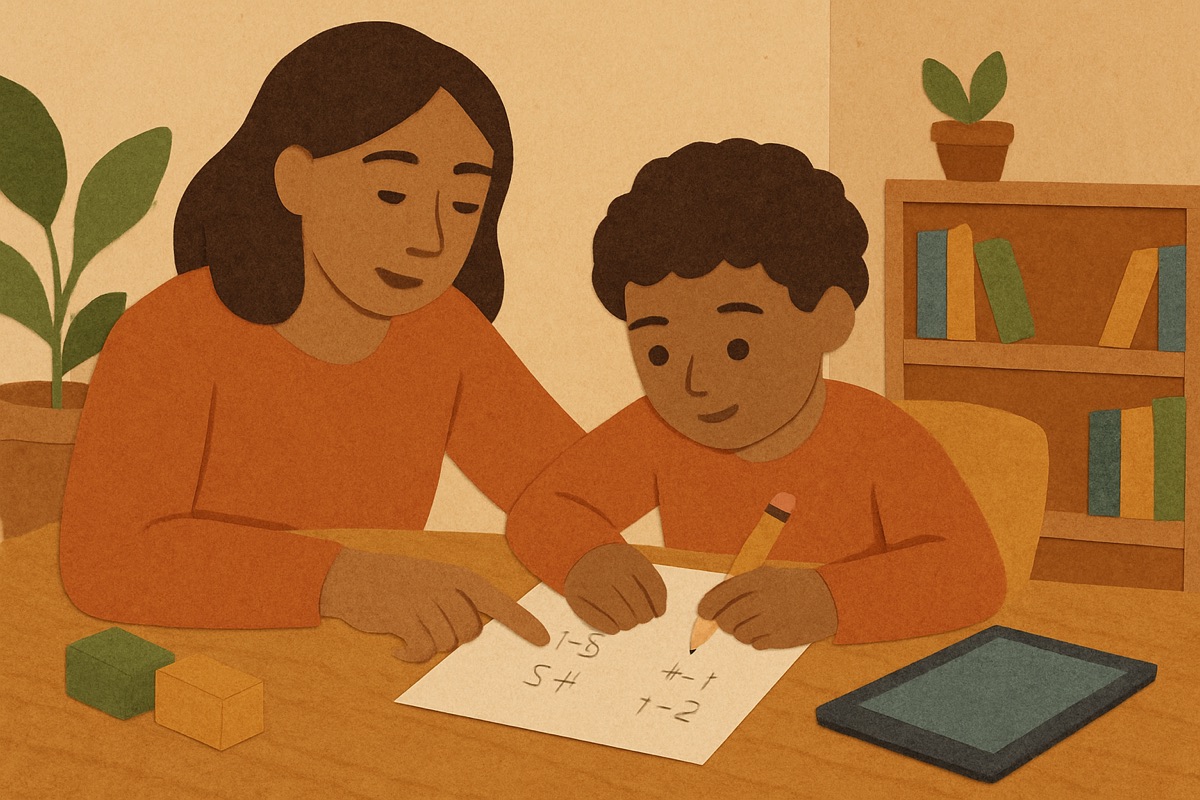
A kindergarten mom showed me her son's math app once, proud that he'd cleared forty levels. He tapped through it fast, correct answer after correct answer, barely looking. Then I put five buttons on the table and asked him how many. He counted them out loud, touched each one, and got it right, but slower and with real effort. The app had him tapping. The buttons had him thinking. That difference is the whole question when it comes to math apps for kindergarten, and it's worth sitting with before you download anything.
I'm not against screens for five year olds, and I'm not going to pretend they're evil. Some apps genuinely help. But kindergarten math is a special case, and the honest answer to whether your kindergartner should use a math app is: maybe, in small doses, and only if the app is doing something a pile of household objects can't do better.
What kindergarten math actually is
Kindergarten math is not really about answers. It's about a few enormous ideas taking root. That numbers are amounts of real things. That counting means touching each object once and only once. That seven is genuinely more than four, not just a word that comes later when you count.
These ideas get built through hands. A kid who moves five crackers into a pile, then adds two more and counts the whole group, is wiring something a tap on glass rarely reaches. The physical act of moving objects is doing real work in a five year old's brain. A lot of what looks like learning on a screen at this age is just pattern-matching. Tap the bigger blob, hear the happy sound, move on, without the amount ever meaning anything.
When an app helps at this age
There are real cases where a math app earns its place in kindergarten. A well-made one can give a kid low-stakes repetition with recognizing written numbers, which is genuinely useful and a little tedious to do with flashcards. It can be a good bridge when you're stuck somewhere, a waiting room or a long car ride, and the alternative is nothing. And for a kid who's anxious about being wrong in front of people, a screen that never sighs can be a gentler place to practice.
If you do use one, here's what I'd look for:
- It makes the kid count real-looking things, not just tap the right shape
- The pace is slow and the kid can hear or see the counting, not race through
- Getting an answer wrong leads to a gentle try again, not a punishment or a nag
- Rewards are tied to actually finishing a real task, not just to time spent tapping
- No ads, and no dark little tricks pushing your five year old to keep going
That reward point matters more than parents expect. A lot of apps hand out prizes for sheer minutes or streaks, which teaches a kid to value staying on the screen rather than understanding anything. The apps worth using tie the payoff to real progress. We built Math Prizes for our own kids partly to keep that line honest, so the reward lands when a skill clicks and not when a timer rolls over. Even so, at the kindergarten age I'd lean on objects first and treat any screen as the occasional supplement.
Why the bin of buttons usually wins
Here is what a jar of buttons or a handful of dry beans does that most apps can't. Your kid holds the amounts. They can make a pile of six, physically split it into three and three, and see with their own hands that it's still six. They can be wrong and fix it themselves by recounting. They can go as slow as they need to, and nobody is racing them to the next level with a cheerful sound.
You also get to be in it with them. "How many now?" "What if I add two more?" That back and forth, a real person asking real questions, is worth more at five than any app on the market. It costs nothing, it fits in a kitchen drawer, and it never runs out of battery. I've never met a kindergartner who needed a subscription to learn that five plus two is seven. I've met plenty who learned it counting goldfish crackers.
A reasonable rule of thumb
If you want a simple line to hold, here it is. At the kindergarten age, keep any math app to short bursts, maybe ten minutes, a few times a week, and only ever as a side dish. The main meal should be counting real things with a real grown-up nearby. If an app is quietly replacing that hands-on counting rather than adding to it, it's doing harm even if the kid is clearing levels.
The forty-levels boy was fine, by the way. His mom just started keeping a bowl of buttons on the counter and asking him to count things while she cooked. Within a few weeks his counting was as fast as his tapping, but now it meant something. The screen wasn't the problem. It just wasn't the point. At five, the point is nearly always in their hands.