Measurement at Home: Teaching Inches, Feet, and Why We Estimate First
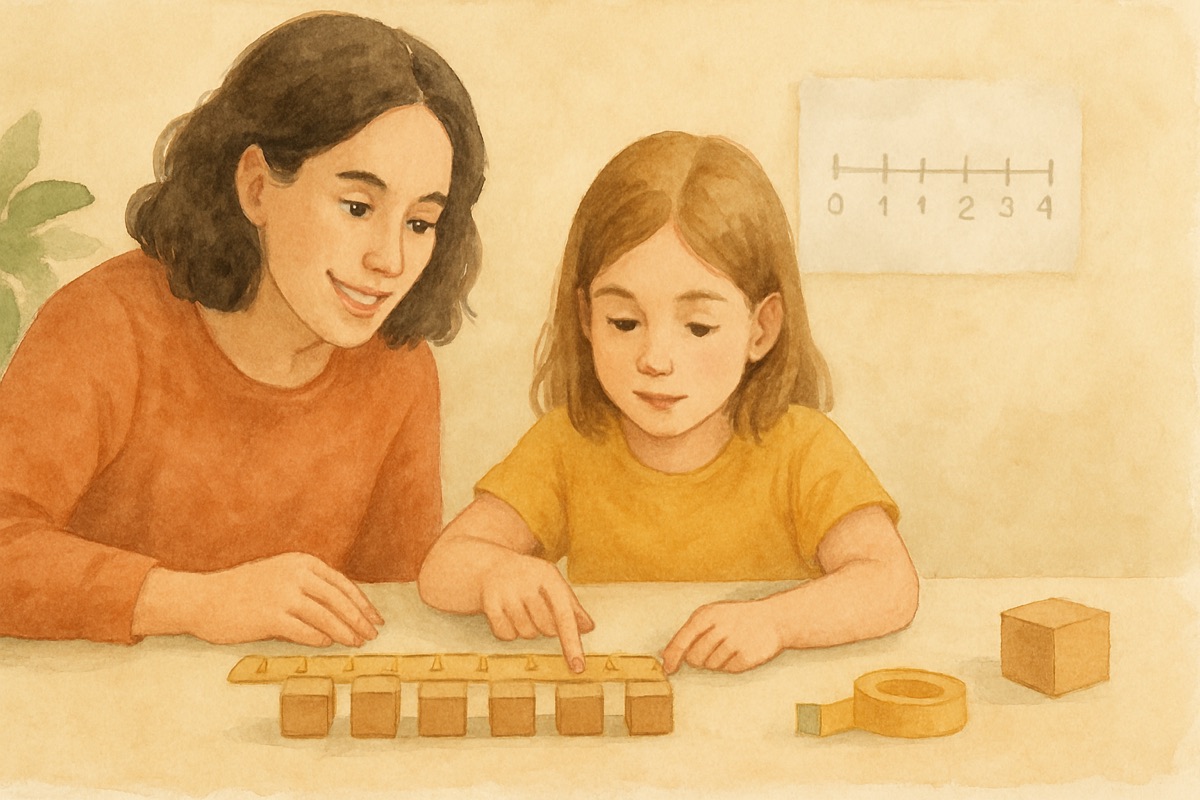
A second grader once handed me a worksheet where he'd written that a pencil was 47 inches long. He'd lined the pencil up against the ruler just fine. He'd read a number. He just had no idea that 47 inches is taller than most kindergartners, so a wrong answer looked exactly as reasonable to him as a right one. That's the gap. Reading a ruler is a small mechanical skill. Knowing what the numbers mean is the whole point, and it's the part most kids skip.
When you set out to teach measurement to kids at home, the temptation is to go straight to the tool. Hand them a ruler, show them the lines, have them measure ten things. That works for the mechanics and does almost nothing for the understanding. The fix is older than any curriculum: make them guess first.
Estimate before you measure, every single time
Here's the rule I'd put on the fridge. Before the ruler ever touches the object, the kid says out loud how long they think it is. "I bet this crayon is four inches." Then they measure and see how close they got.
This does two things at once. It forces them to build a mental picture of what an inch actually is, and it turns every measurement into a tiny game with a result. A kid who guessed four and measured three and a half feels something. That little gap between the guess and the truth is where the learning happens. A kid who just reads "three and a half" off a ruler feels nothing and remembers nothing.
Keep the guesses cheap and frequent. You're not grading accuracy. You're building the instinct that says 47 inches for a pencil is obviously wrong.
Give them body rulers they carry everywhere
Kids need reference points they can't lose. Their own body works.
- The width of a small child's finger is close to half an inch. A grown finger is close to a full inch.
- From the tip of the thumb to the first knuckle is roughly an inch for many adults.
- Most kids' feet are shorter than a foot, which is a fun thing to discover, because the unit is literally called a "foot" and theirs doesn't match.
Once a kid knows their pinky is about half an inch, they can estimate the length of a Lego brick without any tool at all. That portable sense of scale is worth more than perfect ruler technique. Have them measure their own hand span once and remember it. Then the whole house becomes measurable.
Start with inches, then earn feet
Don't introduce inches and feet in the same sitting. Let inches settle first. Measure small things: a spoon, a phone, a paperback, a shoe. Small objects keep the numbers small and the ruler easy to line up.
The jump to feet should come from a real problem, not a definition. Try to measure the couch in inches and let it get annoying. "It's ninety-something inches, hang on, I keep losing my spot." That frustration is the setup. Now you say, "There's a bigger unit for big things. Twelve inches make one foot." The couch becomes "about eight feet," and suddenly feet make sense because the kid felt the need for them.
A cheap tape measure helps here. Rulers stop at twelve inches, and a kid who has to flip a ruler end over end across the floor is going to make mistakes. Let the tool match the size of the job.
Measure real things with a real reason
Worksheets ask kids to measure lines on paper. Fine for five minutes. The measuring that sticks has a purpose behind it.
- Will the new bookshelf fit in that corner? Measure the corner. Measure the shelf.
- How tall is everyone in the family? Mark a doorframe and measure heights across a year.
- Cutting wrapping paper for a box. Too short and you can see the gift. Measure first.
- How far can you jump? Mark the floor with tape, jump, measure the distance, try to beat it.
The jump one is my favorite because it combines estimating, measuring, and a kid's natural urge to beat their own record. They'll measure the same distance five times without complaining once, because now the number means something to them.
Line it up right, and let them be a little wrong
A few mechanical things do matter, so teach them plainly. Start at the zero mark, not the end of the ruler, because most rulers have a little blank margin before the zero and kids who start at the edge read everything a bit long. Keep the ruler flat against the object. Read the line closest to the end of the thing you're measuring.
Then let go of perfection. Real measurement is a little imprecise, and a kid who says "about six and a half inches" understands more than a kid who insists on "six and nine-sixteenths" without knowing whether that's big or small. Estimating length is not sloppiness. It's the skill of knowing roughly how big things are, which is the thing adults actually use every day. I have never once in my life needed to measure something to the sixteenth of an inch in my kitchen. I estimate constantly.
What good looks like after a few weeks
You'll know it's working when the ruler starts coming out on its own. A kid who's got it will guess before they measure without being told. They'll catch their own wild answers, the way that second grader eventually did when he looked at "47 inches" for a pencil and laughed. They'll reach for feet when the thing is big and inches when it's small, and they won't need you to tell them which.
That's the goal. Not a child who can read a ruler, though they'll do that too. A child who has a feel for size, who can look at a gap and say "that's about a foot" and be close. Keep it hands-on, keep the guesses coming, and measure things that actually matter to somebody in the house. The ruler is the easy part. The judgment is what you're really after.