How to Make Math Practice Feel Like a Win Instead of a Chore
The five minutes before the worksheet decides everything
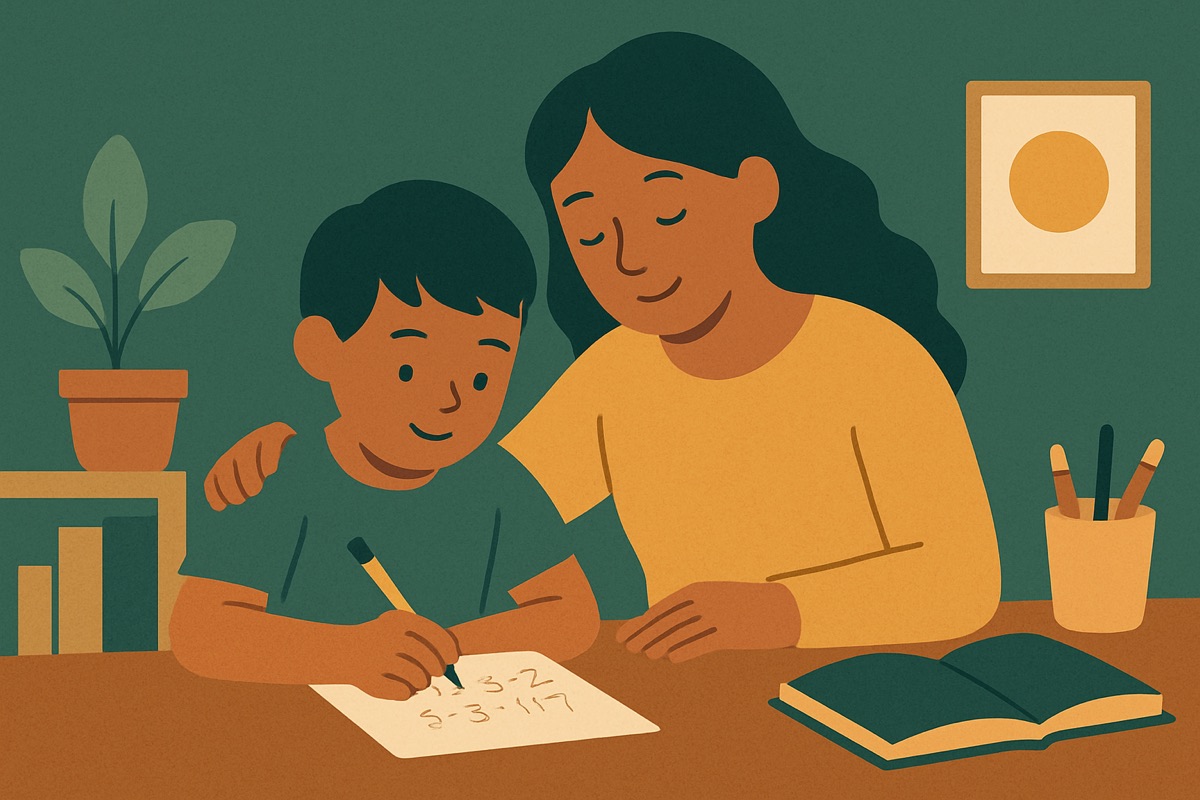
A second grader I taught last year named Micah used to slump in his chair the second flashcards came out. Shoulders down, pencil rolling off the desk. His mom told me practice at home was a nightly fight. So we tried one thing: instead of "let's do your math," she started with a single problem he already knew cold, something like 5 plus 5. He answered fast, she said "yep, ten," and then they kept going. Within a week the slump was gone. Nothing about the math changed. The opening changed.
If you want to make math practice fun, or at least not miserable, the setup matters more than the content. A kid who walks into practice expecting to fail will fight you before the first question. A kid who walks in expecting to get a few right will lean forward. You get to choose which one you build.
Start with a win they can't lose
The fastest way to change the mood is to make the first question a guaranteed success. Not a hard one you hope they get. An easy one you know they'll nail.
This feels backward. We want practice to stretch them, so starting easy seems like a waste. It isn't. The first correct answer sets the emotional tone for the whole session. Momentum is real, and it starts from a standstill.
Try this order for a ten minute session:
- One problem they know instantly (confidence)
- Three or four at their current level (the actual work)
- One that's a small reach, framed as a puzzle, not a test
- End on something easy again so the last feeling is "I can do this"
That last one matters. Kids remember the ending. If practice ends on the problem that stumped them, the story they tell themselves is "math is the thing I can't do." End on a win and the story flips.
Keep it short on purpose
Ten minutes of focused practice beats forty minutes of a kid staring out the window while you re-ask the same question. When practice drags, it stops being practice and becomes a stare-down.
Set a timer where they can see it. When it goes off, you stop, even if you're mid-thought. This does two useful things. It caps the pain, so a kid who dreads math knows there's a hard exit. And it makes the time feel scarce, which weirdly makes them work harder inside it. A ten minute window with a clear end is easier to walk into than an open-ended "we'll do math until you get it."
Short and daily beats long and occasional every single time. A kid who does ten minutes six days a week will pull ahead of a kid who grinds an hour every Sunday, and they'll fight you about a tenth as much.
Reward the effort, not the busywork
Here's where a lot of good intentions go sideways. Parents (and plenty of apps) reward volume. Fifty problems finished, gold star. But fifty problems answered on autopilot teaches a kid to rush and guess, because the reward is for finishing, not for thinking.
Tie the reward to something real instead:
- Getting faster on a fact that used to be slow
- Explaining how they got an answer, not just the answer
- Trying a hard one without melting down, even if they miss it
- Catching and fixing their own mistake
When my own kids practice, the thing worth celebrating is the moment a fact clicks and becomes automatic. That's mastery. That's the point. A reward that shows up for real progress teaches a kid that progress is the goal. A reward that shows up for sheer quantity teaches them that speed-guessing pays. This is the whole reason we built Math Prizes to pay out for genuine improvement rather than for grinding through repetition, but you can run the same rule with a sticker chart on the fridge. Reward the thing you actually want more of.
Let them see the progress
Kids are terrible at noticing their own growth. The 7s table that took them a painful minute in September feels exactly as hard in October, from the inside, even though they're now twice as fast. They can't feel the trend. You have to show it to them.
Keep it concrete. Time one round of facts on Monday and write the number on a scrap of paper. Do the same round Friday. When Friday's number is lower, put them side by side. "Monday you took ninety seconds. Today, fifty. That's not luck, that's you getting good at this." A kid who can see the line going the right way will practice without much of a fight, because now there's a scoreboard and they're winning on it.
This works with accuracy too. Save last month's page and this month's page. The improvement that's invisible day to day is obvious across four weeks.
When it goes sideways anyway
Some nights the whole plan falls apart. They're tired, they're hungry, they got in trouble at school, and math is just the thing that's in front of them when the dam breaks. On those nights, stop. A meltdown is not a teachable moment, and forcing practice through tears trains a kid to associate math with feeling awful. That association is far more expensive to undo than one skipped session.
Feed them, let it cool off, and try again tomorrow with the easy first problem. One bad night doesn't erase a good habit. What erases the habit is turning every session into the bad night.
The goal isn't a kid who loves math worksheets. Most kids won't, and that's fine. The goal is a kid who doesn't dread math time, who has felt the specific good feeling of a hard thing getting easier, and who's a little proud of the number on Friday's scrap of paper. Build a few small wins into every session and that kid shows up.