How to Build a Daily Math Habit That Survives Busy Weeks
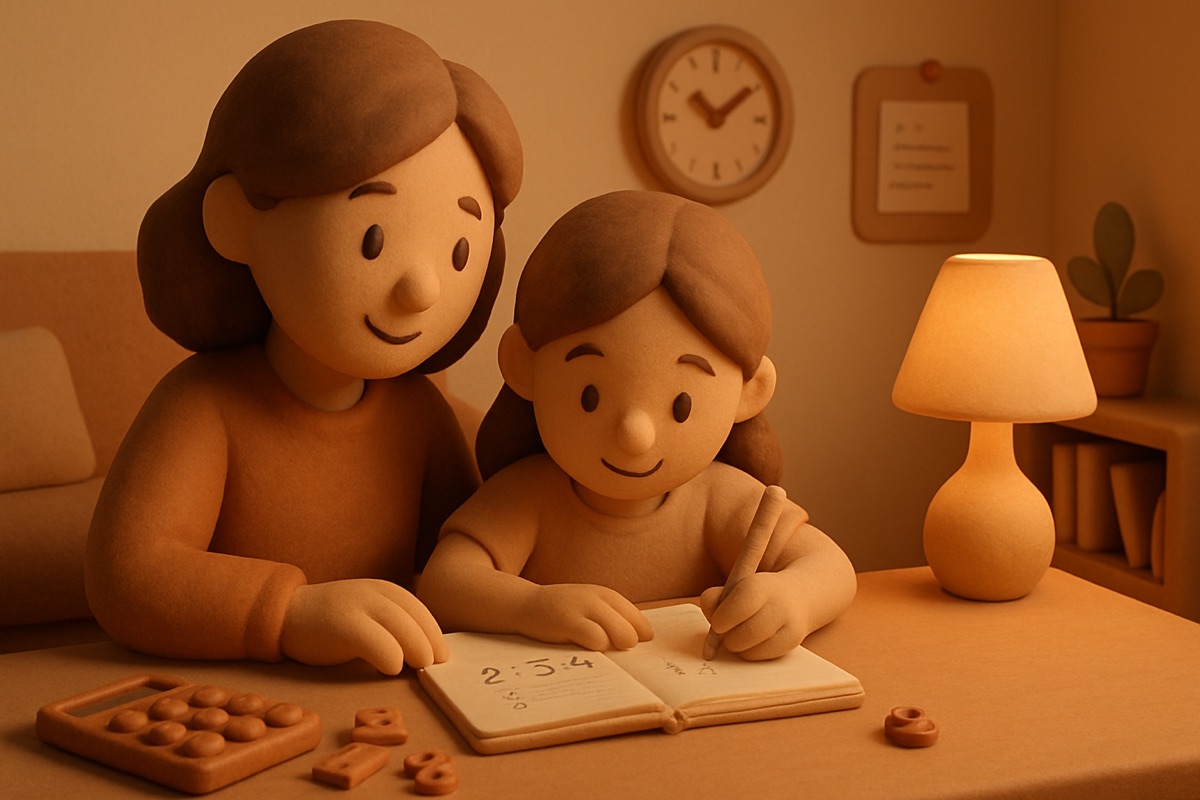
The strongest math kid I ever taught didn't have a tutor. Her mom told me their secret, and it was almost boring. Every night after dinner, while the mom loaded the dishwasher, the daughter did math for the length of one podcast segment. Maybe eight minutes. That was it. No worksheets stacked to the ceiling. No weekend cram sessions. Eight minutes, tied to the dishwasher, basically every single day for two years.
That's the whole trick to a daily math practice habit, and it's why so much advice about it fails. Most families try to start big. An hour on Sunday, a giant workbook, a chart with fifty boxes. It works for about nine days, then a birthday party and a stomach bug and a late soccer game knock it over, and it never gets back up. A habit that only survives calm weeks isn't a habit. It's a good mood.
Small enough that a bad day can't kill it
The number one reason math routines die is that they're too big to do on a hard day. And you'll have a lot of hard days. The move is to shrink the daily version until it's almost embarrassingly small.
Eight minutes. Five problems. One page. Pick something so light that even on the night you get home at 7:45 with a cranky kid and no dinner started, it still fits. Because here's what actually matters: not the size of any single session, but whether the chain stays unbroken. A kid who does five problems a day for a month has practiced 150 times. A kid who does a huge session and then nothing for two weeks has practiced twice.
If your kid is having a genuinely rough night, shrink it further. One problem. Truly. The point on those nights isn't the math. It's protecting the streak, so tomorrow you're continuing a habit instead of restarting one. Restarting is the hard part. Continuing is easy.
Anchor it to something that already happens
Willpower is a terrible foundation for a routine, especially at the end of a long day when yours is gone. What works better is attaching the new habit to something that already happens without fail. Researchers call it habit stacking. You already brush teeth. You already eat dinner. You already have a car ride to school.
That dishwasher mom nailed this without knowing the term. The math didn't depend on anyone remembering. It rode along on a thing that happened anyway. Some anchors that work well:
- Right after dinner, before anyone leaves the table.
- In the car on the way to school (skip counting, fact drills, mental math out loud).
- After the bath, before the bedtime book.
- While you make coffee in the morning, for the early risers.
Pick one anchor and one only. A habit tied to a specific moment beats a habit tied to "sometime today," because "sometime today" quietly becomes "tomorrow" and then never.
Make skipping harder than doing it
Once the habit is small and anchored, add a little friction to skipping. Nothing dramatic. A paper calendar on the fridge where your kid draws an X each day is shockingly effective, because kids do not want to break a run of X's they can see. The visible chain becomes its own reason.
I'd add one caution, since it's the thing I care about most. Whatever you use to track the streak, make sure it rewards real practice and not just clicking through. A kid who learns to game a streak by racing through problems he already knows has built the wrong habit. He's practicing avoidance dressed up as diligence. The streak should represent honest effort at his actual edge, where the problems are a little hard. That's the difference between a habit that grows a kid and a habit that just grows a number.
This is also where a good app earns its keep, if you use one. The decent ones keep the sessions short, aim the problems at what the kid actually needs to work on, and tie any rewards to genuine progress. We built Math Prizes partly around this idea, but a fridge calendar and a fact deck do the same job. The tool matters far less than the daily-ness.
Expect it to break, and plan the repair
Here's the part that separates families who keep the habit from families who lose it. The ones who keep it assume it will break. Vacation happens. Flu happens. A week goes fully sideways. The difference isn't that some families never miss. It's that some families have a rule for getting back on.
Make yours simple: never miss twice. Missing one day is life. Missing two is the start of quitting. So if you skip Tuesday, Wednesday is non-negotiable, even if it's one problem in the car. That single rule, never miss twice, is worth more than any workbook. It turns an inevitable slip into a blip instead of a collapse.
The dishwasher mom missed days. She told me so. Vacation weeks, the odd sick day. She just always came back the next night, no drama, no lecture, no making up for lost time. The dishes needed doing, so the math got done. Two years of that, eight minutes at a time, and her daughter was the strongest kid in my room. Not because she was gifted. Because she showed up.