Do Reward Systems in Learning Apps Help or Just Train Kids to Grind?
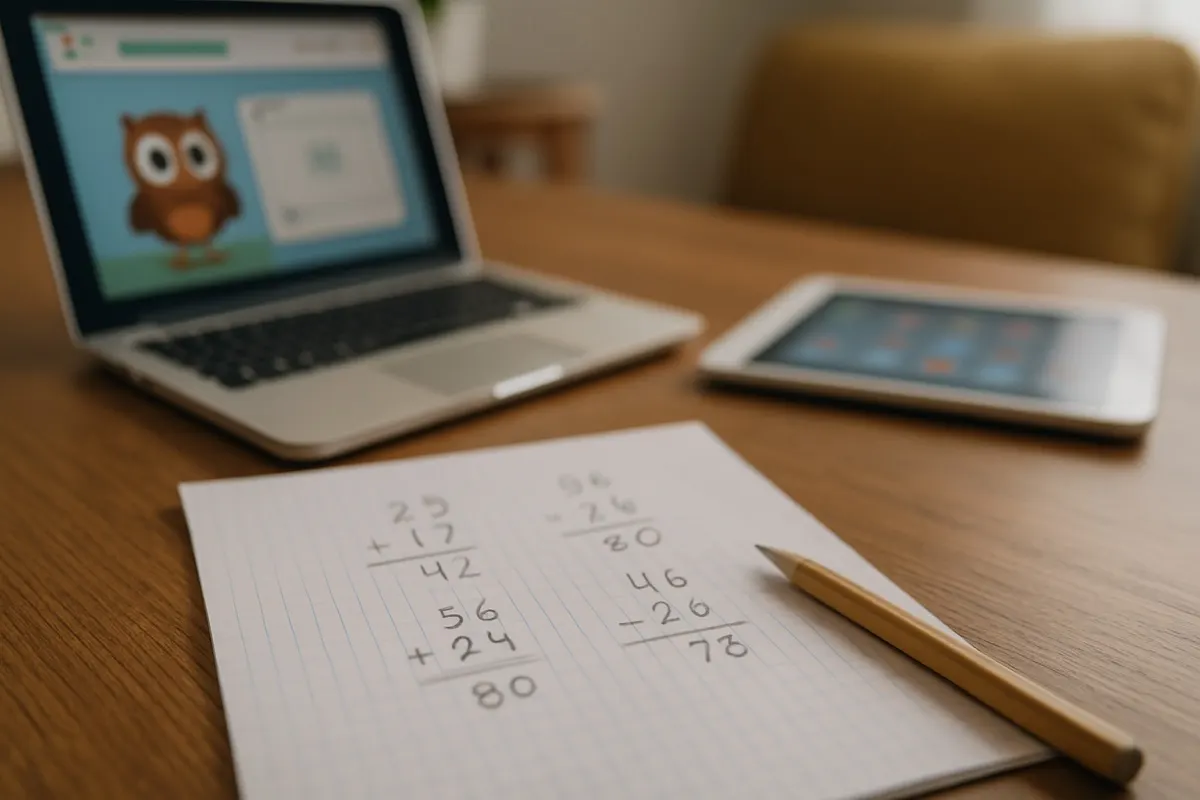
A boy in my class figured out that our reading app gave the same coins whether he read a passage or tapped through it as fast as he could. Within a week he was finishing "sessions" in under a minute, coins piling up, comprehension flat. The app thought he was learning. He was farming. That's the question sitting under every rewards system in learning apps for kids: is the prize pulling a child toward real understanding, or is it teaching them to game the machine?
I've used a lot of these apps with real students, and my answer is that it depends entirely on what the reward is tied to. Rewards aren't good or bad. They're a signal, and kids follow the signal exactly.
Why rewards work at all
There's a reason every app reaches for points and prizes. For a kid who isn't yet in love with math, an external nudge gets them to sit down and start. That first push has real value. A blank practice screen is intimidating, and a little "earn 10 tickets" can be the difference between a kid opening the app and a kid wandering off.
Psychologists call this extrinsic motivation, the pull of an outside reward. It's not a dirty word. Adults work for paychecks. The trouble starts only when the reward becomes the entire point and the learning becomes the thing you rush through to get to it.
The grind trap
Here's what goes wrong. When an app pays out for volume alone, more problems, more taps, more time, it accidentally rewards the wrong behavior. Kids are smart. They find the shortest path to the coins, and that path almost never runs through careful thinking.
I've watched it happen again and again:
- A kid mashes the same answer to burn through a set, ignoring whether it's right.
- A kid picks the easiest level over and over because it pays the same as the hard one.
- A kid races the clock so hard they stop reading the actual problem.
None of these children are lazy. The system told them speed and volume earn the prize, so they optimized for speed and volume. That's grinding, and an app that produces it is training a habit that works against learning. The kid who plays a math app for twenty minutes and comes away having practiced nothing is worse off than a kid who did five problems on paper and understood all five.
What a good reward actually rewards
The apps that get this right tie the payoff to real progress, not to busywork. The difference is subtle in the marketing and enormous in practice.
Good signals look like this. The app gives more for a problem the child found hard than for one they found easy. It rewards a first correct answer more than a lucky guess on the fifth try. It notices when a kid moves up a level and celebrates the mastery, not the minutes. It doesn't hand out the same prize for tapping through as it does for thinking through.
When we built Math Prizes for our own kids, this was the line we kept coming back to. Tie the tickets to genuine progress and a reward becomes a way to mark real learning. Tie them to raw quantity and you've just built a slot machine with a math skin. The mechanic can look almost identical from the outside, which is exactly why parents get fooled.
How to tell which kind you have
You don't need to read a privacy policy to figure out whether an app's rewards are healthy. Sit next to your kid for one session and watch what earns the prize.
Ask yourself a few plain questions. Does your child slow down and think, or speed up and tap? After a session, can they tell you something they figured out, or only how many coins they got? Do they choose harder challenges when those pay more, or do they camp on the easy stuff? If the reward is pulling them toward effort and understanding, keep it. If it's pulling them toward the fastest possible farming, the app is working against you no matter how educational the store listing sounds.
There's a simpler tell, too. Ask your kid what the game is about. If they describe the math, good. If they describe the prize wheel and the coins and barely mention the math at all, you already have your answer.
For the wider decision around screen time, privacy, price, and family rules, use our 12 parent questions about screens, rewards, and learning apps as a companion checklist.
The honest bottom line
Rewards can absolutely help. They lower the barrier to starting, they mark progress a kid can feel proud of, and they can turn a dreaded ten minutes into something a child chooses. But a reward is only as good as the thing it's attached to.
Attach it to real learning and it's a friend. Attach it to grinding and it's a trap dressed up as motivation. The boy farming coins on the reading app wasn't broken and the app wasn't evil. It was just paying for the wrong thing, and he did exactly what he was paid to do. Watch what your kid's app pays for, and you'll know everything you need to.