The Perfectionist Kid Who Freezes on Hard Math Problems
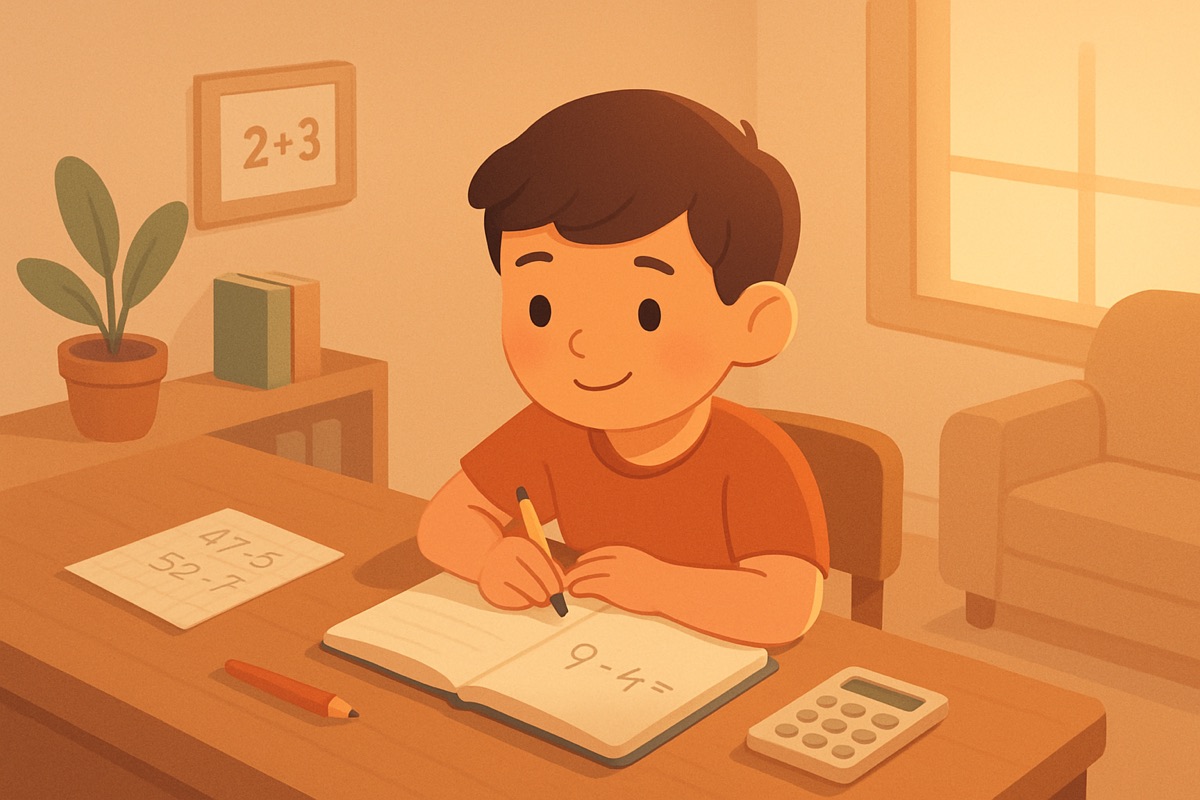
The blank paper that wasn't confusion
I had a third grader, sharp kid, who would stare at a hard problem with her pencil hovering an inch above the paper and just not move. Two minutes. Three. If I came over and asked what she was stuck on, she'd say "I don't know how to do it." But she did know. When I sat next to her and said "just try something, it's fine if it's wrong," she'd solve it in twenty seconds. She wasn't confused. She was frozen.
That's the thing people miss about a perfectionist child in math. The freeze looks exactly like not understanding, so parents and teachers respond by explaining the concept again. And the kid nods, and freezes again, because the problem was never the concept. The problem is that this kid has decided a wrong answer is unbearable, so their brain would rather produce nothing than risk producing something imperfect. Nothing feels safe. Nothing can't be marked wrong.
Why math is where it shows up worst
Perfectionism hides fine in some subjects. In writing, there's no single right answer, so a kid can hedge. In math, there's one right number, and it's either right or it's not. For a kid who ties their worth to being right, that's the scariest subject there is. Every problem is a little test of whether they're still smart.
So the harder the problem, the higher the stakes feel, and the more likely the freeze. Easy problems don't scare a perfectionist because they're sure of them. It's the ones with real risk that lock them up. Which is a cruel irony, because the hard problems are exactly the ones that would grow them the most.
You'll often see it paired with speed. These kids are frequently the ones who were "good at math" early, when everything came fast and easy. Then the work got hard enough to require actual struggle, and struggle felt like evidence they weren't good at math after all. So they'd rather not engage than face that evidence.
What actually helps
You don't fix this by telling a kid "it's okay to make mistakes." They've heard that a hundred times and it hasn't moved them, because the fear isn't rational and a slogan won't touch it. What helps is changing what actually happens when they try and miss, over and over, until their body stops bracing for disaster.
- Praise the attempt, not the answer. When your kid tries a hard problem and gets it wrong, make a genuine deal out of the trying. "You went for it, that's the part that matters." They need to see that effort is the thing that earns your approval, not correctness.
- Do a problem wrong on purpose in front of them. Let them catch you. Make an ordinary, no-big-deal thing of fixing it. "Oh, I added instead of subtracted, let me redo it." Kids need to watch a competent adult be wrong and survive it.
- Separate practice from performance. Make it clear that when you're practicing, mistakes are the whole point, they're how you find the shaky spots. A tool that pays a kid for effort and progress rather than a perfect streak can help here, because it stops rewarding the exact thing you're trying to loosen. But you can do this with a pencil and a kitchen table too.
- Shrink the first step. When a kid freezes, don't ask them to solve it. Ask them to do one small thing: "Just write down the first number." "Just circle what it's asking for." Movement breaks the freeze, and once they're moving they usually keep going.
- Kill the clock. Timed drills are poison for these kids. The pressure to be fast and right at once is precisely what jams them. Give them time. Speed comes later, on its own, once the fear is gone.
The words that make it worse
A few things well-meaning adults say that pour gas on this fire.
"You're so smart." Sounds kind. It teaches the kid that being smart is their identity, and every wrong answer becomes a threat to who they are. Praise the work instead.
"This is easy." If the kid then can't do it, they've now learned they can't even do the easy stuff. Never call a problem easy. Call it "a good one to practice."
"Why can't you just try?" They can hear the frustration, and to a perfectionist frustration reads as disappointment, which is the exact thing they froze to avoid. Stay calm and steady even when the freeze is testing your patience.
The slow turn
This doesn't flip overnight. You're rewiring a kid's relationship with being wrong, and that took years to build, so give it months. What you're looking for isn't a kid who loves being wrong. That's not a real person. You're looking for a kid who can be wrong and keep going, who picks the pencil up and tries something instead of sitting with a blank page.
My third grader got there, mostly. By spring she'd still hesitate on the hard ones, but the hesitation lasted a few seconds instead of three minutes, and then she'd write something down. One day she got a hard one wrong, erased it, tried again, got it, and just moved on without looking up for approval. That's the whole thing right there. Not fearless. Just willing to try, and steady enough to be wrong on the way to right.